



Shipping an excavator overseas from the USA involves transporting heavy construction machinery using RoRo vessels, flat rack containers, or breakbulk cargo depending on the machine’s size, weight, and mobility. Freight forwarders coordinate inland transport, export documentation, and ocean freight to move excavators safely to international destinations.
What are the best methods to ship heavy equipment?”
Excavators can be shipped overseas using RoRo vessels, flat rack containers, or breakbulk cargo depending on their size and weight. As a leading heavy machinery exporter, All Transport Depot coordinates these methods to ensure secure international delivery based on the machine’s specific dimensions.
How to ship excavator overseas from USA?
Key Takeaways
First, excavators can be shipped overseas using RoRo vessels, flat rack containers, or breakbulk cargo. In general, each of these shipping methods is commonly used in international excavator shipping, depending on the machine’s size, dimensions, and mobility. For example, some excavators move easily onto RoRo vessels, while others require flat rack or breakbulk transport due to their larger size.
Next, the correct method to ship an excavator overseas from the USA depends on several factors. In particular, the machine’s overall dimensions, operating weight, and ability to move on its own tracks help determine which shipping solution works best. Therefore, these factors play an important role when planning international heavy equipment transport.
Finally, freight forwarders such as All TransportDepot Inc. help coordinate the entire shipping process. Specifically, they arrange inland transportation, export documentation, port logistics, and ocean freight when businesses need to ship excavators overseas or export construction equipment internationally. As a result, companies can move heavy machinery safely and efficiently through the global shipping network.
🚢 Ship with Confidence. Partner with Top NVOCCs and leading global ocean carriers. 👉 Get a Rate: 👉 Place Your Order: 📲 WhatsApp: +1 (470) 791 4497
https://alltransportdepot.com/roro-shipping-cost/
https://alltransportdepot.com/place-order/
📞 Call: +1 (678) 528 5794
📧 Email: ship@alltransportdepot.com
👉 Get a shipping rate here:
https://alltransportdepot.com/rollon-rolloff-shipping-services-from-usa-to-overseas-containers-and-cars/roro-shipping-cost/
Heavy Equipment Shipping Methods
When shipping heavy equipment, you can choose between RoRo (Roll-on/Roll-off), container shipping, or breakbulk/flat rack options. The best method depends on the equipment type, size, weight, budget, and the level of protection or handling required during transit.
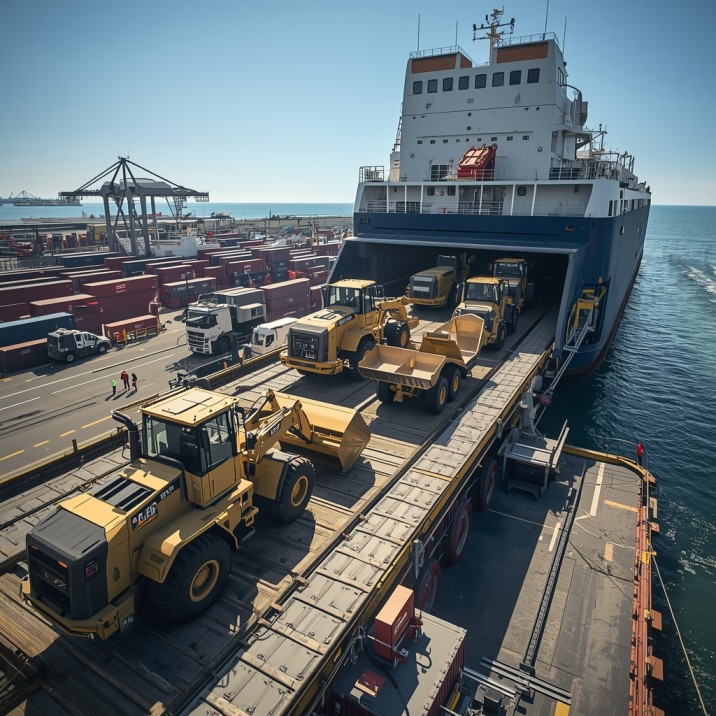
RoRo (Roll-on/Roll-off)
Best for drivable machinery
- Drive-on, drive-off convenience
- CAT loaders, dump trucks, tractors
- Most cost-effective option
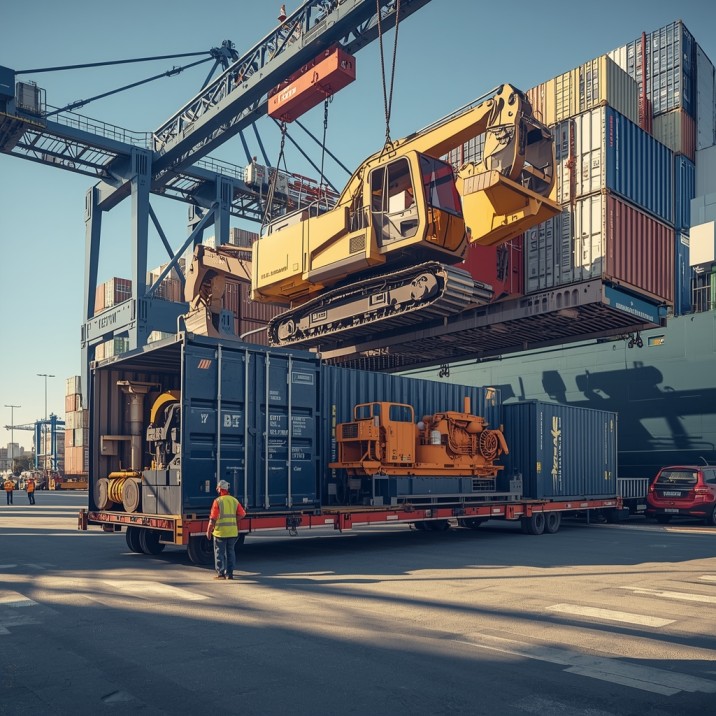
Container Shipping
Good for compact machinery
- Full container, maximum security
- Space for cars, machinery, or items
- Weather-protected and safe
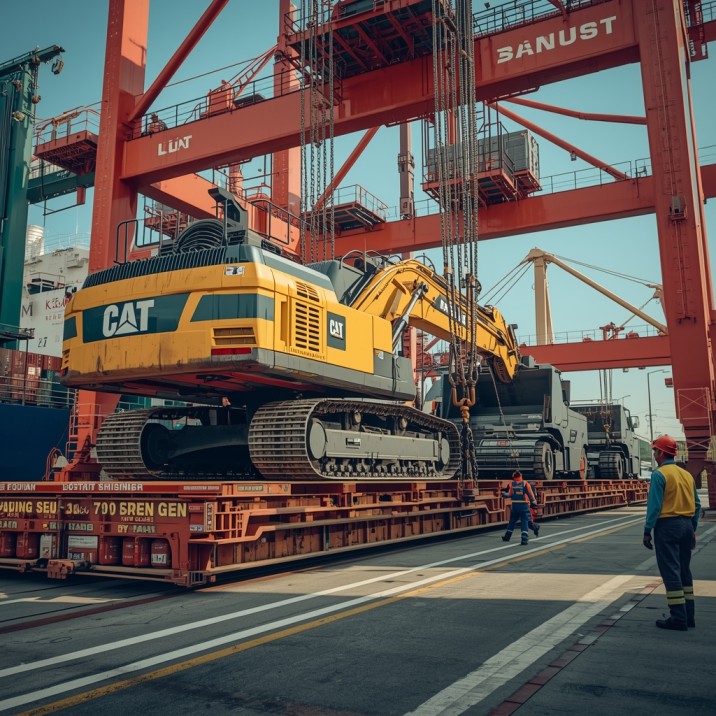
Breakbulk / Flat Rack Shipping
Designed for oversized heavy equipment
- Suitable for large excavators and cranes
- Custom lifting and secure stowage
- Get full protection for your vehicle
Step-by-Step: How to Ship an Excavator Overseas from the USA?
When companies need to ship an excavator overseas from the USA, the process typically follows several coordinated logistics steps. First, the machine must be measured and evaluated to determine the most suitable shipping method. Next, freight forwarders coordinate transportation, export documentation, and port handling before the equipment is loaded onto the vessel. Ultimately, these steps help ensure that international excavator shipping is handled safely and efficiently.
The typical process includes the following steps:
Step 1 – Measure the excavator
First, measure the machine’s length, width, height, and operating weight. These dimensions help determine whether the excavator can ship via RoRo, flat rack container, or breakbulk cargo.
Step 2 – Choose the shipping method
Next, the appropriate method is selected. For example, smaller excavators may ship using RoRo vessels, while larger machines may require flat rack containers or breakbulk shipping.
Step 3 – Arrange inland trucking
After that, the excavator is transported from its current location to the export port using heavy equipment transport trucks or specialized trailers.
Step 4 – Submit AES export filing
Meanwhile, export documentation must be prepared. Specifically, shipment information is submitted through the Automated Export System (AES) as required by U.S. export regulations.
Step 5 – Load the excavator at the port
Once the equipment arrives at the port, terminal operators load the machine onto the vessel using RoRo ramps or heavy cranes, depending on the shipping method.
Step 6 – Ocean freight transport
Finally, the excavator is transported overseas by ocean vessel to the destination port, where the receiving logistics team coordinates unloading and delivery.
As a result, businesses that need to ship excavators overseas or export construction equipment internationally can move heavy machinery safely through the global shipping network with proper planning and logistics coordination.
How to Prepare an Excavator for Overseas Shipping
To begin, preparing an excavator for overseas shipping requires performing a deep “quarantine-level” clean, securing all movable attachments, and reducing fuel levels to meet safety standards. Consequently, failing to meet these requirements can lead to expensive delays or port rejections. To ensure a smooth process, All Transport Depot, a leading heavy machinery export specialist, recommends following this professional excavator shipping checklist to avoid port delays and extra handling fees:
Therefore, exporters, contractors, and equipment owners must follow several important steps before delivering the excavator to the port.
Step-by-Step: How To Prepare an Excavator for International Shipping!
Step 1 – Clean the Excavator Thoroughly
First, the excavator must be professionally cleaned before export.
Ports and shipping terminals have extremely strict cleanliness rules because soil, plant material, or debris may violate agricultural and biosecurity regulations.
For example, mud on tracks or undercarriages may trigger inspection delays.
Therefore:
-
Remove all mud and dirt from tracks or wheels
-
Wash the undercarriage and bucket
-
Clean the engine compartment if necessary
-
Remove soil, grass, and organic materials
🧽 Important: Terminals may refuse dirty machinery.
⚠️ In fact, a recent client was charged $2,300 by the terminal for mandatory cleaning because the excavator arrived with dirt on the tracks.
Step 2 – Inspect Equipment Condition
Next, the excavator must be fully operational.
In most cases, ports require that heavy equipment can move under its own power for loading purposes.
Therefore, before delivery you should:
-
Start the engine and verify operation
-
Confirm hydraulic systems function correctly
-
Check tracks or wheels for damage
-
Ensure steering and controls respond properly
If the excavator cannot run, then additional equipment such as cranes or forklifts may be required for loading, which may significantly increase costs.
Step 3 – Secure the Boom, Arm, and Bucket
After inspection, the excavator’s moving components must be properly secured.
Specifically:
-
Lower the boom and arm completely
-
Lock the bucket into transport position
-
Secure hydraulic arms if necessary
This step is critical because loose or unsecured parts may shift during ocean transport, potentially causing equipment damage.
Step 4 – Remove Loose Accessories
Additionally, any removable or loose accessories must be removed before shipping.
For example:
-
Toolboxes
-
Detachable attachments
-
Spare buckets
-
Personal items inside the cab
Removing accessories prevents loss and ensures the machine complies with shipping safety regulations.
Step 5 – Reduce Fuel Levels (If Required)
Finally, some shipping lines require fuel levels to be reduced before export.
Typically, equipment should have no more than one-quarter tank of fuel.
However, requirements vary by carrier and port. Therefore, always confirm fuel policies with your freight forwarder before delivery.
Why Proper Preparation Is Important
Proper excavator preparation is not only recommended but also essential.
Otherwise, exporters may face:
-
Terminal cleaning charges
-
Missed vessel departures
-
Port storage fees
-
Equipment handling delays
Furthermore, most ports allow only limited free storage, typically 14 days.
Consequently, delays caused by cleaning or repairs can quickly generate additional port charges.
Frequently Asked Questions
Do excavators need to be cleaned before overseas shipping?
Yes. Excavators must be clean and free of soil or debris before entering most port terminals. Otherwise, the terminal may require professional cleaning before loading.
What happens if an excavator arrives dirty at the port?
If heavy equipment arrives dirty, the terminal may order mandatory cleaning services. These charges can be expensive. In some cases, cleaning fees exceed $2,000, depending on the level of contamination.
Does an excavator need to run to be shipped overseas?
In many cases, yes. Ports prefer equipment that can move under its own power because it simplifies loading onto RoRo vessels or flat racks.
How much fuel should be in an excavator before shipping?
Most shipping lines require less than one-quarter tank of fuel, although the exact rule varies by carrier.
Heavy Equipment Shipping Methods
When shipping heavy equipment, you can choose between RoRo (Roll-on/Roll-off), container shipping, or breakbulk/flat rack options. The best method depends on the equipment type, size, weight, budget, and the level of protection or handling required during transit.
RoRo (Roll-on/Roll-off)
Best for drivable machinery
- Drive-on, drive-off convenience
- CAT loaders, dump trucks, tractors
- Most cost-effective option
Container Shipping
Good for compact machinery
- Full container, maximum security
- Space for cars, machinery, or items
- Weather-protected and safe
Breakbulk / Flat Rack Shipping
Designed for oversized heavy equipment
- Suitable for large excavators and cranes
- Custom lifting and secure stowage
- Get full protection for your vehicle
How do I get an international excavator shipping quote?
All Transport Depot provides comprehensive logistics for heavy machinery exports, managing the entire process from inland pickup in the USA to final ocean freight delivery.
Contact All TransportDepot:
📲 WhatsApp: +1 (470) 791-4497
📞 Phone: +1 (678) 528-5794
📧 ship@alltransportdepot.com
Or request a shipping rate here:
All TransportDepot specializes in international heavy equipment shipping, including:
-
excavators
-
construction equipment
-
forklifts
-
industrial machinery
-
oversized project cargo
As a licensed NVOCC, All TransportDepot coordinates global excavator shipping and machinery export logistics.
Is a license required to ship an excavator overseas?
Essentially, international equipment shipping—including transporting excavators and heavy construction machinery—is strictly governed by maritime authorities that regulate ocean freight companies. In the United States, specifically, any company arranging these shipments must comply with regulations set by the Federal Maritime Commission (FMC).
Furthermore, these rules are designed to ensure that providers handling RoRo transport, containerized shipments, and project cargo logistics follow high financial and documentation standards. Because of this regulatory environment, it is vital for contractors and equipment owners to partner with a licensed logistics provider.
To meet these standards, All Transport Depot Inc. operates as a fully licensed and bonded NVOCC (Non-Vessel Operating Common Carrier). Consequently, we are authorized to manage global shipping solutions for excavators and heavy machinery while adhering to all federal requirements.
In addition to ensuring legal compliance, our team coordinates various transport methods, such as:
-
RoRo vessels for drivable equipment.
-
Flat rack containers for oversized machinery.
-
Breakbulk cargo for massive project shipments.
Ultimately, by choosing a regulated partner, clients can feel confident that All Transport Depot Inc. handles every international equipment shipment in full accordance with U.S. maritime rules.
How Are Excavators Shipped Overseas?
Excavators are typically transported overseas using one of three major shipping methods coordinated by All TransportDepot Inc.
| Shipping Method | Best For |
|---|---|
| RoRo Shipping | Rolling or tracked equipment |
| Flat Rack Containers | Oversized excavators |
| Breakbulk Cargo | Extremely large machinery |
Each shipping method allows equipment exporters to transport heavy machinery overseas safely and efficiently. Therefore, All TransportDepot evaluates each shipment carefully before selecting the most suitable transport method.
Step-by-Step: How All TransportDepot Ships Excavators Overseas
1. Measure the Excavator
Before arranging shipment, the logistics specialists at All TransportDepot Inc. review the machine’s:
-
length
-
width
-
height
-
operating weight
These measurements determine the correct international excavator shipping method and whether the machine can ship by RoRo vessel, flat rack container, or breakbulk cargo. The cost to ship an excavator overseas depends on several factors. First, the machine size affects the space required on the vessel. Next, the shipping method—such as RoRo or flat rack—also influences the price. In addition, the distance to the export port may increase inland trucking costs.
Typical excavator sizes include:
| Excavator Type | Typical Weight |
|---|---|
| Mini excavator | 2,000 – 10,000 lbs |
| Medium excavator | 20,000 – 50,000 lbs |
| Large excavator | 50,000 – 200,000+ lbs |
Once the measurements are confirmed, All TransportDepot can determine the most efficient way to ship the excavator overseas from the USA.
2. Choose the Correct Shipping Method
RoRo Shipping
RoRo vessels allow excavators to roll onto the ship using loading ramps. As a result, this is often the most economical method for excavator shipping overseas when the equipment can move on tracks or wheels.
Major RoRo carriers include:
-
Höegh Autoliners
-
Grimaldi Lines
All TransportDepot regularly coordinates RoRo bookings when customers need to ship heavy equipment overseas or export construction machinery internationally.
Flat Rack Container Shipping
However, when excavators exceed standard container dimensions, All TransportDepot arranges flat rack container shipping.
Flat racks allow oversized machinery to be secured on reinforced container platforms and transported safely across oceans.
This method is commonly used for:
-
wide excavators
-
construction machinery
-
oversized equipment
Therefore, flat rack shipping is often the preferred solution for oversized excavator shipping overseas.
Breakbulk Shipping
In some cases, extremely large excavators must ship as breakbulk cargo.
Breakbulk shipments require cranes to load the equipment directly onto the vessel deck.
All TransportDepot coordinates breakbulk logistics for:
-
mining equipment
-
industrial machinery
-
large project cargo
Breakbulk shipping is typically used when the machine is too large for container transport.
When Is Breakbulk Shipping Used for Excavators?
In some cases, extremely large excavators must ship as breakbulk cargo. Specifically, this method is used when the machine is too large or too heavy to fit inside a container or on a flat rack. Therefore, instead of using standard containers, ports load the equipment directly onto the vessel.
During breakbulk shipping, port operators use heavy cranes to lift the excavator and place it directly onto the vessel deck. As a result, this method allows companies to transport oversized heavy equipment that cannot move through traditional container shipping methods.
Accordingly, freight forwarders such as All TransportDepot Inc. help coordinate the specialized logistics required for breakbulk shipments. For example, the company assists clients shipping:
-
mining equipment
-
industrial machinery
-
large project cargo
Ultimately, companies typically choose breakbulk shipping for excavators and heavy machinery when the equipment exceeds container size limits or requires direct crane loading onto the vessel.
Which U.S. Ports Ship Excavators Overseas?
Heavy equipment exports arranged by All TransportDepot Inc. typically depart from major U.S. ports such as:
-
-
-
In addition, All TransportDepot arranges heavy haul trucking and inland transportation to move excavators from construction sites, auction yards, or equipment dealers to these export terminals.
-
Heavy equipment shipments leaving the United States often depart from major export ports that handle oversized cargo and construction equipment. For example, ports such as the Port of Jacksonville (JAXPORT) regularly handle RoRo vessels, container cargo, and breakbulk shipments used to ship excavators overseas from the USA:
https://www.jaxport.com/
In addition, these ports have the space, cranes, and loading areas needed to handle large construction machinery, heavy lift cargo, and project equipment. Because of this, they play an important role when companies export excavators, bulldozers, and other heavy equipment overseas.
Therefore, freight forwarders like All TransportDepot Inc. help coordinate inland trucking, port scheduling, and terminal handling so the equipment reaches the export port safely before the vessel departs. At the same time, coordination between trucking companies, port terminals, and ocean carriers helps ensure that excavators and other heavy machinery ship overseas safely, efficiently, and in line with international shipping requirements.
🚢 Ship with Confidence. Partner with Top NVOCCs and leading global ocean carriers. 👉 Get a Rate: 👉 Place Your Order: 📲 WhatsApp: +1 (470) 791 4497
https://alltransportdepot.com/roro-shipping-cost/
https://alltransportdepot.com/place-order/
📞 Call: +1 (678) 528 5794
📧 Email: ship@alltransportdepot.com
What Documents Are Required to Export an Excavator?
The documents required to export an excavator from the USA typically include a Commercial Invoice, Packing List, Bill of Lading, and AES Export Filing. Freight forwarders often help prepare and submit these documents to ensure the shipment follows U.S. export regulations.
Accordingly, All TransportDepot Inc. assists companies with export compliance and documentation when shipping heavy equipment internationally.
Typical documents include:
-
Commercial Invoice – shows the buyer, seller, and value of the excavator
-
Packing List – describes the equipment and shipment details
-
Bill of Lading – the official ocean transport document
-
AES Export Filing – required export declaration submitted to the U.S. government
In addition, export information must be submitted through the Automated Export System (AES) before the shipment leaves the United States. Therefore, proper AES filing is an essential step when companies ship excavators overseas or export construction equipment internationally.
Regulations for Shipping Excavators Overseas from the USA
When companies need to ship an excavator overseas from the USA, international equipment shipping must follow rules set by maritime authorities that oversee ocean freight companies. In the United States, businesses that arrange ocean shipping—such as NVOCCs and freight forwarders—must follow regulations from the Federal Maritime Commission (FMC):
https://www.fmc.gov/
These rules help ensure that companies handling international heavy equipment shipping, excavator export logistics, and construction machinery transport follow proper operational, financial, and documentation standards when moving cargo overseas.
Because of this, companies that plan to ship excavators overseas from the USA or export heavy construction equipment internationally should work with a licensed logistics provider. All TransportDepot Inc., a licensed and bonded NVOCC, follows these requirements while arranging reliable global shipping solutions for excavators, construction equipment, and heavy machinery.
In addition, working with a regulated logistics company gives clients peace of mind. They know their international equipment shipment is handled by a company that follows U.S. maritime rules and coordinates ocean freight safely and correctly.
How Much Does It Cost to Ship an Excavator Overseas?
The cost to ship an excavator overseas depends on several factors:
-
machine size and weight
-
shipping method
-
origin and destination ports
-
inland transportation distance
What Affects the Cost to Ship an Excavator Overseas?
The cost to ship an excavator overseas depends on several key factors. First, the size and weight of the machine affect how much space it requires on the vessel. Next, the shipping method—such as RoRo equipment shipping, flat rack container transport, or breakbulk cargo—can change the overall price. In addition, the origin and destination ports influence ocean freight rates and port handling costs. Finally, the distance for inland transportation to the export port can also impact the total shipping cost.
Therefore, companies planning to ship an excavator overseas from the USA should review these factors carefully when requesting an international shipping quote.
Key factors include:
-
machine size and weight
-
shipping method (RoRo, flat rack container, or breakbulk)
-
origin and destination ports
-
inland transportation distance to the export port
Typical shipping price ranges are:
| Shipping Method | Typical Cost |
|---|---|
| RoRo Shipping | $2,000 – $7,000 |
| Flat Rack Container | $4,000 – $12,000 |
| Breakbulk Cargo | $8,000 – $25,000+ |
👉 Request a shipping quote here:
https://alltransportdepot.com/rollon-rolloff-shipping-services-from-usa-to-overseas-containers-and-cars/roro-shipping-cost/
All TransportDepot provides customized logistics solutions for companies that need to ship construction equipment overseas or export heavy machinery internationally.
Can Excavators Fit in Shipping Containers?
In some cases, smaller machines can fit inside standard shipping containers. For example, certain mini excavators may fit inside a 20-foot or 40-foot container when their dimensions fall within container limits. However, in most situations, medium and large excavators exceed standard container dimensions. As a result, these larger machines often require alternative shipping methods such as flat rack containers, RoRo vessels, or breakbulk cargo for international transport. Therefore, before companies plan to ship an excavator overseas, they should review the machine’s size, width, height, and operating weight to determine the most suitable shipping solution.
Typical container interior sizes:
| Container | Length | Width | Height |
|---|---|---|---|
| 20 ft container | ~19.4 ft | ~7.7 ft | ~7.9 ft |
| 40 ft container | ~39.5 ft | ~7.8 ft | ~7.9 ft |
Therefore, larger machines typically require flat rack containers or breakbulk shipping, which All TransportDepot regularly arranges for equipment exporters.
Heavy Equipment Shipping Methods
When shipping heavy equipment, you can choose between RoRo (Roll-on/Roll-off), container shipping, or breakbulk/flat rack options. The best method depends on the equipment type, size, weight, budget, and the level of protection or handling required during transit.
RoRo (Roll-on/Roll-off)
Best for drivable machinery
- Drive-on, drive-off convenience
- CAT loaders, dump trucks, tractors
- Most cost-effective option
Container Shipping
Good for compact machinery
- Full container, maximum security
- Space for cars, machinery, or items
- Weather-protected and safe
Breakbulk / Flat Rack Shipping
Designed for oversized heavy equipment
- Suitable for large excavators and cranes
- Custom lifting and secure stowage
- Get full protection for your vehicle
Frequently Asked Questions
Who ships excavators overseas?
Licensed freight forwarders such as All TransportDepot Inc. coordinate international excavator shipping by arranging trucking, port handling, and ocean freight.
Can non running excavators be shipped overseas?
Yes. All TransportDepot can arrange crane loading, forklift handling, and specialized heavy equipment transport for non operational machinery.
How long does excavator shipping take?
Typical ocean transit times include:
| Destination | Transit Time |
|---|---|
| Europe | 10–18 days |
| West Africa | 20–30 days |
| Middle East | 25–40 days |
| Caribbean | 5–10 days |
Transit times vary depending on vessel schedules and port congestion.
Total Door-to-Door Excavator Shipping Timeline
Although ocean transit times provide a general estimate, the total door-to-door shipping time for an excavator includes several additional steps. Therefore, it is important to consider the full logistics process from pickup to final delivery.
Typically, shipping an excavator overseas from the United States takes 3 to 9 weeks from pickup to delivery, depending on destination, vessel schedule, and customs procedures.
Step-by-Step Excavator Shipping Timeline
Step 1 – Inland Pickup and Trucking (1–5 Days)
First, the excavator must be transported from the job site, dealer, or equipment yard to the export port.
This step usually takes 1 to 5 days, depending on distance.
For example:
-
Local trucking near port: 1–2 days
-
Cross-state transport: 3–5 days
During this stage, carriers use lowboy trailers, step deck trailers, or heavy equipment transport trucks.
Step 2 – Port Delivery and Terminal Processing (2–7 Days)
Next, once the excavator arrives at the port terminal, the equipment must pass through several processing steps.
These typically include:
-
Terminal intake inspection
-
Equipment cleanliness verification
-
Documentation confirmation
-
Scheduling for vessel loading
In most cases, this stage takes 2 to 7 days, although timing may vary depending on terminal workload.
Step 3 – Export Filing and Documentation (1–3 Days)
At the same time, the freight forwarder must complete AES export filing and shipping documentation.
This process normally includes:
-
Export declaration filing
-
Preparing the dock receipt
-
Finalizing the bill of lading instructions
Therefore, documentation preparation generally takes 1 to 3 days when all information is provided in advance.
Step 4 – Ocean Transit Time (2–8 Weeks)
After loading, the excavator travels via ocean vessel to the destination port.
Typical ocean transit times include:
-
USA → Europe: 2–4 weeks
-
USA → Africa: 4–6 weeks
-
USA → Middle East: 4–7 weeks
-
USA → Asia: 5–8 weeks
However, transit times may vary depending on vessel routing and intermediate port stops.
Step 5 – Destination Port Clearance (3–7 Days)
Once the excavator arrives at the destination port, customs clearance must occur before release.
This stage usually includes:
-
Customs documentation review
-
Import duty payment
-
Terminal handling procedures
Typically, customs clearance takes 3 to 7 days, although inspections may extend this timeline.
Step 6 – Final Inland Delivery (1–5 Days)
Finally, after customs clearance, the excavator is transported from the destination port to the buyer’s location.
This last step normally takes 1 to 5 days, depending on the distance between the port and the delivery site.
Example Total Shipping Timeline
Here is a simplified example of a complete excavator shipping process:
| Shipping Stage | Typical Time |
|---|---|
| Inland pickup to port | 1–5 days |
| Port processing | 2–7 days |
| Export documentation | 1–3 days |
| Ocean transit | 2–8 weeks |
| Destination customs | 3–7 days |
| Final delivery | 1–5 days |
Therefore, the full shipping timeline from pickup to delivery typically ranges between 3 and 9 weeks.
Frequently Asked Questions About Excavator Shipping Time
How long does door-to-door excavator shipping take?
In most cases, total delivery time ranges between 3 and 9 weeks, depending on the destination and vessel schedule.
What causes delays when shipping heavy equipment overseas?
Common causes include:
-
Missed vessel sailings
-
Port congestion
-
Customs inspections
-
Documentation errors
-
Inland trucking delays
Can shipping time be reduced?
Yes. Working with an experienced freight forwarder and preparing documents early can significantly reduce delays.
Ship Your Excavator Overseas With Confidence
🚢 Ship with confidence. Partner with world-renowned NVOCCs and leading global ocean carriers.
👉 Get a Rate
https://alltransportdepot.com/roro-shipping-cost/
👉 Place Your Order
https://alltransportdepot.com/place-order/
📲 WhatsApp: +1 (470) 791-4497
📞 Call: +1 (678) 528-5794
📧 Email: ship@alltransportdepot.com
All TransportDepot Inc.
FMC Licensed & Bonded NVOCC – License #021693
Ship Your Excavator with All TransportDepot
When it comes to shipping an excavator overseas, All TransportDepot Inc. provides reliable international shipping solutions. In particular, our team helps companies move heavy machinery safely and efficiently across global trade routes.
Specifically, we arrange international transport for:
-
excavators
-
construction equipment
-
industrial machinery
-
oversized project cargo
In addition, our logistics team coordinates several specialized shipping methods designed for heavy equipment and machinery export. As a result, clients can choose the transport option that best fits their cargo size, weight, and destination.
These services include:
-
RoRo equipment shipping
-
flat rack container transport
-
breakbulk cargo logistics
-
inland trucking to export ports
Furthermore, our team manages the logistics process from pickup to port delivery. Therefore, companies that need to ship excavators overseas from the USA can rely on experienced coordination and global freight solutions provided by All TransportDepot Inc..
Frequently Asked Questions About Shipping Excavators Overseas
Shipping excavators internationally often raises several important questions. Therefore, to help exporters, contractors, equipment dealers, and project managers better understand the process, the following frequently asked questions provide clear and practical answers about excavator shipping.
Can excavators be shipped by RoRo?
Yes, excavators can often be shipped using Roll-on/Roll-off (RoRo) vessels.
In fact, RoRo shipping is one of the most common and efficient methods for transporting heavy construction equipment internationally. RoRo vessels are specifically designed with loading ramps that allow machinery to be driven, rolled, or carefully maneuvered onto the vessel deck.
However, in most cases, the excavator must meet certain requirements. For example, the equipment should generally:
-
Be operable
-
Move under its own power
-
Fit within vessel size and weight limitations
Therefore, when these conditions are met, RoRo shipping becomes a simple, efficient, and cost-effective option for transporting excavators overseas.
Can an excavator fit inside a shipping container?
Sometimes, yes. Mini excavators and compact construction equipment may fit inside a standard shipping container.
For instance, smaller machines can occasionally fit inside a 20-foot or 40-foot container, depending on the exact dimensions of the equipment.
However, most medium-sized and large excavators are simply too large for standard containers. Consequently, these machines usually require alternative shipping methods.
For example, exporters typically use:
-
Flat rack containers
-
Breakbulk cargo
-
RoRo vessels
Therefore, choosing the correct shipping method depends primarily on the machine’s size, weight, and overall mobility.
How much does it cost to ship an excavator overseas?
The cost of shipping an excavator internationally can vary significantly. In general, pricing depends on several important factors.
For example, shipping costs are typically influenced by:
-
Excavator size and weight
-
Shipping method (RoRo, flat rack, breakbulk, or container)
-
Origin and destination ports
-
Inland transportation distance
-
Terminal handling and port charges
Consequently, smaller excavators may cost considerably less to ship than large tracked construction machines.
Therefore, because every shipment is unique, a customized freight quote is usually necessary to determine the final shipping cost.
Do excavators need export documentation?
Yes, excavators shipped from the United States require proper export documentation.
First and foremost, exporters must comply with U.S. export regulations. Therefore, several documents are typically required before equipment can be loaded onto a vessel.
These documents usually include:
-
AES (Automated Export System) filing
-
Commercial invoice
-
Packing list
-
Ocean bill of lading
In addition, the destination country may require additional customs documentation or import permits.
Therefore, working with an experienced freight forwarder ensures proper preparation and submission of all export and import documentation in advance. This proactive approach significantly reduces the risk of delays during the shipping process.
Can non-running excavators be shipped overseas?
Yes, companies can ship non-operational excavators internationally. However, these shipments often require additional loading arrangements.
For example, when an excavator cannot move under its own power, port operators typically use specialized equipment to load the machine onto the vessel. These methods may include:
-
Crane loading
-
Forklift handling
-
Specialized heavy equipment loading services
As a result, the shipping process may involve additional labor and equipment, which can increase overall transport costs.
Nevertheless, proper planning and coordination allow freight forwarders and port operators to transport non-running excavators overseas safely and efficiently.
What is the best way to ship an excavator overseas?
The best shipping method depends largely on the machine’s size, weight, and operating condition.
For example:
-
RoRo shipping is often ideal for operable machinery.
-
Flat rack containers are commonly used for oversized excavators.
-
Breakbulk shipping may be required for extremely large construction equipment.
Therefore, selecting the appropriate shipping method ensures safe transportation, efficient handling, and cost-effective logistics.
Heavy Equipment Shipping Methods
When shipping heavy equipment, you can choose between RoRo (Roll-on/Roll-off), container shipping, or breakbulk/flat rack options. The best method depends on the equipment type, size, weight, budget, and the level of protection or handling required during transit.
RoRo (Roll-on/Roll-off)
Best for drivable machinery
- Drive-on, drive-off convenience
- CAT loaders, dump trucks, tractors
- Most cost-effective option
Container Shipping
Good for compact machinery
- Full container, maximum security
- Space for cars, machinery, or items
- Weather-protected and safe
Breakbulk / Flat Rack Shipping
Designed for oversized heavy equipment
- Suitable for large excavators and cranes
- Custom lifting and secure stowage
- Get full protection for your vehicle
Need a Quote to Ship an Excavator Overseas?
If you need to ship an excavator overseas from the United States, the logistics specialists at All TransportDepot Inc. can arrange the entire export process from pickup to ocean freight.
Contact All TransportDepot:
📲 WhatsApp: +1 (470) 791-4497
📞 Phone: +1 (678) 528-5794
📧 ship@alltransportdepot.com
Or request a shipping rate here:
Types of Excavators and Heavy Machinery That Can Be Shipped Overseas
What Kinds of Heavy Equipment Are Eligible for International Shipping?
Exporters, contractors, and international buyers frequently ask one primary question: What specific types of excavators and heavy construction machinery can be shipped overseas?
In reality, nearly all categories of heavy earthmoving equipment can be transported across global borders. For instance, companies regularly ship mini excavators, crawler units, and wheeled models to international ports. Furthermore, specialized machinery such as demolition excavators, loaders, and bulldozers are standard cargo for professional freight forwarders.
Because the ideal shipping method depends heavily on the machine’s dimensions and weight, various logistics options exist. Consequently, transporters typically utilize Roll-on/Roll-off (RoRo) vessels, flat rack containers, or breakbulk methods to ensure safe delivery. Therefore, the following breakdown illustrates how different machine types move across global trade routes.
Can Mini Excavators Be Shipped Overseas?
Yes, mini excavators and compact construction units are shipped internationally every day. Since these machines are relatively small and lightweight, exporters often have the option to secure them inside standard shipping containers. Alternatively, RoRo vessels provide a highly efficient and cost-effective transport method for mobile compact equipment.
As a result of this logistical flexibility, contractors frequently export mini excavators to island nations and emerging construction markets. For example, many buyers in the Caribbean depend on imported compact equipment for local residential and site development projects. Moreover, these smaller machines are preferred for projects with limited ground space.
Regional Shipping Guides:
Shipping Crawler Excavators (CAT 320 or Komatsu PC200)
Indeed, freight companies frequently ship heavy crawler excavators like the CAT 320, Komatsu PC200, and Hitachi ZX200 to global destinations.
Due to their substantial weight and oversized dimensions, these machines usually travel via RoRo vessels or specialized flat rack containers. Furthermore, mining companies and infrastructure developers across Africa rely heavily on these imports to maintain their fleets. Notably, choosing a carrier with heavy-lift experience is vital for these high-value machines.
Logistics for Key African Markets:
Can Large Excavators Be Shipped to Europe?
Exporters regularly transport large-scale excavators, such as the CAT 336 and Volvo EC350, to European markets. In most situations, shipping lines load these massive units onto specialized RoRo decks to accommodate their extreme height and width. Additionally, construction firms throughout Europe import this machinery from the U.S. to support large-scale industrial projects.
Key European Shipping Routes:
Exporting Excavators to the Middle East and Asia
Clearly, the Middle East and Asia are primary destinations to ship excavator overseas from USA exports due to rapid urban expansion.
Because energy development projects require robust machinery, many construction firms in the Middle East import high-performance units from the United States. Similarly, many Asian markets prefer importing used construction equipment because it offers a balance of reliability and competitive pricing. Consequently, the trade volume for heavy machinery in these regions remains consistently high.
Top Middle East and Asia Destinations:
Infrastructure Support in Latin America and the Caribbean
Finally, to ship excavator overseas from USA, many exporters choose Latin America because heavy equipment shipping to the region remains in high demand to support expanding infrastructure, construction, and mining sectors.. Because many countries in these regions continue to expand their logistics networks, the demand for excavators remains incredibly strong. As a result, Logistics providers now operate specialized shipping routes that handle everything from mini-loaders to massive crawler excavators.
Popular Latin American Routes:
Key Takeaways: Shipping Excavators Overseas
-
Most Common Machine Types: Mini excavators, crawler excavators (CAT 320, Komatsu PC200), and large-scale units (CAT 336).
-
Best Shipping Methods:
Choose RoRo (Roll-on/Roll-off) for drivable units, containers for mini excavators, and flat racks for oversized non-drivable equipment. -
Top Global Destinations: Heavy demand exists in the Caribbean, West Africa, the Middle East, and Southeast Asia.
🚢 Ship Excavators Overseas With Confidence
When you are ready to ship, All TransportDepot Inc. is here to help. Whether you are shipping a vehicle, heavy equipment, or construction machinery overseas, our team can guide you through the process from start to finish. In addition, we coordinate inland transportation, export documentation, port logistics, and ocean freight to ensure your shipment moves safely and efficiently.
Therefore, if you would like to receive an estimate, you can quickly request a shipping rate below.
Next, when you are ready to move forward with your shipment, you can open a shipping file using the order link below.
👉 Place Your Order
https://alltransportdepot.com/place-order/
Additionally, if you have questions or would like assistance reviewing your shipment details, our logistics team is available to help.
📲 WhatsApp: +1 (470) 791-4497
📞 Phone: +1 (678) 528-5794
📧 Email: ship@alltransportdepot.com
Finally, when you choose All TransportDepot Inc., you work with a company that operates under U.S. maritime regulations.
All TransportDepot Inc. — FMC Licensed & Bonded NVOCC #021693

Asif Iqbal publishes and reviews international logistics content for All TransportDepot Inc., covering vehicle shipping, heavy machinery, containers, project cargo, export coordination and transportation technology. All TransportDepot Inc. has been in business for 20 years and operates as an FMC-licensed NVOCC (License No. 021693) from 2305 Fourth Street, Suite B, Tucker, GA 30084. The company coordinates export shipments through major U.S. ports. His articles emphasize accurate cargo information, practical routing, documentation, terminal requirements and clear customer guidance.