
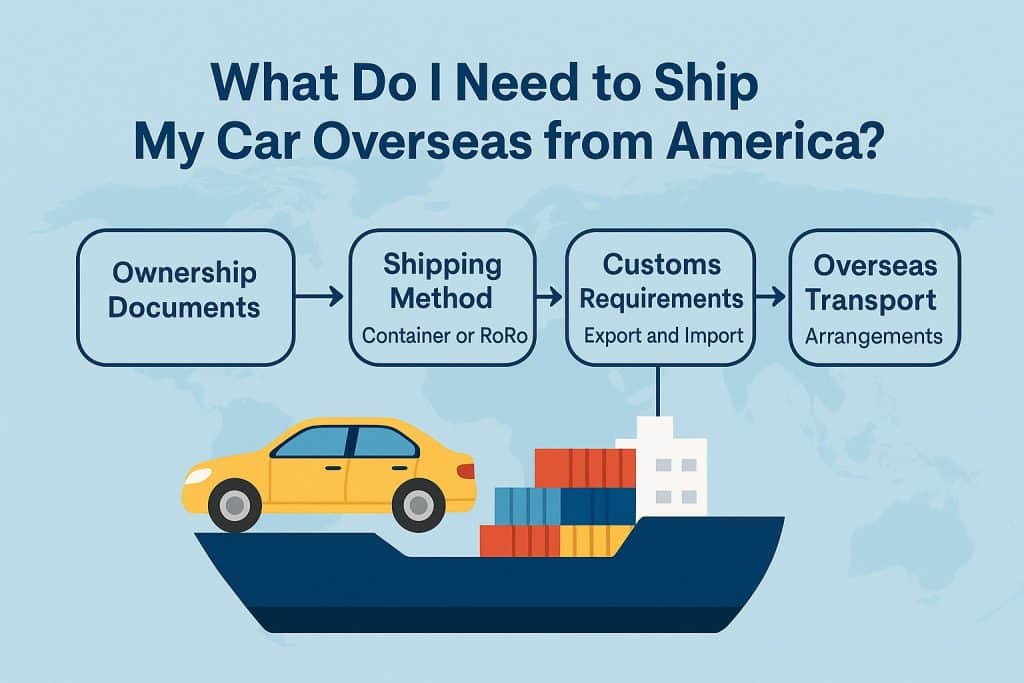
Shipping a car overseas is a regulated international export process that involves far more than simply booking space on a vessel. In fact, successful overseas car relocation depends on understanding international auto transport rates, as well as selecting the right shipping method—such as RoRo shipping services or container transport—and properly completing all required vehicle export paperwork in compliance with U.S. Customs regulations. Therefore, following the steps below in the correct order helps prevent delays, inspections, rejected exports, and unexpected costs.
Quick Answer: Shipping a car overseas requires confirming import eligibility, preparingVehicle Export Paperwork., choosing the correct shipping method (RoRo, container, or air), and complying with U.S. Customs regulations. Costs, timelines, and inspections vary by destination, which is why working with a licensed exporter is essential.
🔍 Check RoRo Shipping Rates:
👉 https://alltransportdepot.com/roro-shipping-cost/
📝 Place Your Order:
👉 https://alltransportdepot.com/place-order/
📧 Email: ship@alltransportdepot.com
📞 Phone: +1 (678) 528-5794
📲 WhatsApp: +1 (470) 791-4497
🌐 Website: www.alltransportdepot.com
Ship with confidence — All TransportDepot Inc. 🚢🚗
🚢 Vehicle Shipping Calculator
Place an online request →
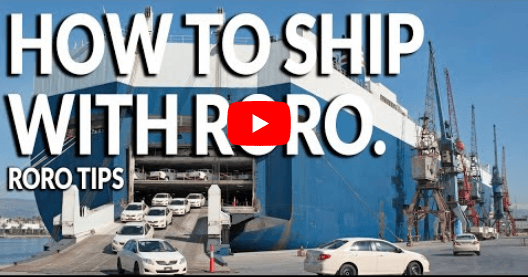
STEP 1: Shipping a Car Overseas:- First, Confirm the Destination Country Allows Your Vehicle
First and foremost, confirm that the destination country allows your vehicle to be imported. Confirm you have all Vehicle Export Paperwork. In many cases, exporters overlook this step and encounter problems later.
Specifically, check:
-
Vehicle age limits
-
Engine size restrictions
-
Emissions and safety standards
-
Left-hand vs right-hand drive rules
-
Import duties, VAT, excise, or luxury taxes
Importantly, permission to export from the U.S. does not guarantee permission to import abroad. Because of this, always confirm eligibility before booking shipping.
STEP 2: Next, Understand That the U.S. Government Regulates All Vehicle Exports
Next, understand that U.S. Customs and Border Protection (CBP) regulates every vehicle leaving the United States.Every vehicle leaving the United States falls under the authority of U.S. Customs and Border Protection (CBP).
Specifically, CBP will:
-
Verify ownership
-
Validate the VIN
-
Confirm the vehicle is not stolen or restricted
As a result, missing or late documents can stop an export immediately, even after the vehicle reaches the port. Therefore, documentation accuracy is critical.
STEP 3: Then, Secure the Original Vehicle Title Early
Then, secure the original vehicle title as early as possible. Without it, export approval cannot proceed.
In practice, Customs requires:
-
The original title (not a scan)
-
Exact VIN match
-
Correct owner name
Consequently, even small errors can halt shipping. For this reason, review the title carefully before moving the vehicle to the port.
STEP 4: Additionally, Shipping a car overseas-Address Any Lien on the Vehicle
Additionally, if the vehicle is financed, the lender controls the title. Therefore, you must obtain lien holder authorization.
To proceed correctly, request:
-
A lien holder authorization letter
-
Official letterhead
-
Explicit approval for international export
-
VIN listed
-
Signature and date
Otherwise, Customs will block the shipment regardless of booking or payment.
STEP 5: Vehicle Export Paperwork-Now, Prepare All Required Export Documents
Now that ownership is clear, prepare all required export documents. At this stage, accuracy matters more than speed.
✅ What Documents Are Required to Ship a Car Overseas?
To comply with export law, in regards to Vehicle Export Paperwork you must provide:
-
Original Vehicle Title
Either lien-free or accompanied by written lienholder permission. -
Bill of Sale
Especially important for recent or auction purchases. -
Government-Issued ID
Passport or U.S. driver’s license. -
Power of Attorney (POA)
Allows a licensed exporter to file on your behalf. -
Shipper’s Export Declaration (SED / EEI)
Filed electronically through AES by the exporter. -
Consignee Information
Name and contact details of the overseas recipient.
Most importantly, never place the original title inside the vehicle or container.
Instead, submit the title separately after the container is sealed.
Need help with Vehicle Export Paperwork.
👉 Visit www.alltransportdepot.com
📧 Email: ship@alltransportdepot.com
📞 Phone: +1 (678) 528-5794
📲 WhatsApp: +1 (470) 791-4497
🌐 Website: www.alltransportdepot.com
Ship with confidence — All TransportDepot Inc. 🚢🚗
STEP 6: After That, Follow the 72-Hour Export Rule
After that, comply with the 72-hour export rule, which Customs enforces strictly.
Specifically:
-
Documents must be submitted 72 business hours before loading
-
The rule applies to RoRo and container shipments
-
The rule applies to new and used vehicles
As a result, late submission prevents loading, even when vessel space is available.
Car Shipping Methods
When shipping a car, you can choose between RoRo (Roll-on/Roll-off) and container shipping. The best option depends on your vehicle type, budget, and level of protection required during transit.
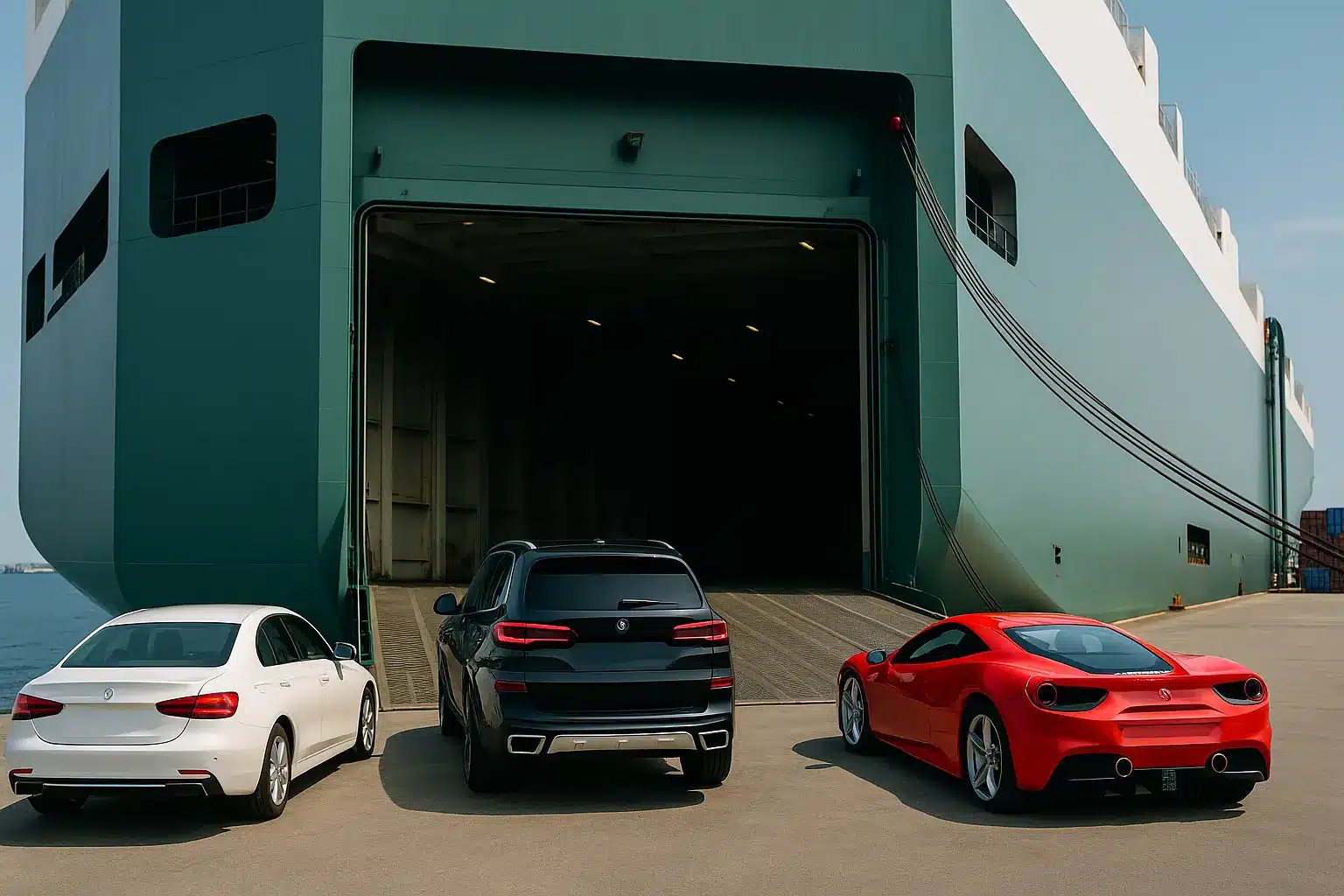
RoRo Shipping
Ideal for running vehicles
- Drive-on, drive-off convenience
- Lowest cost option
- Faster shipping times
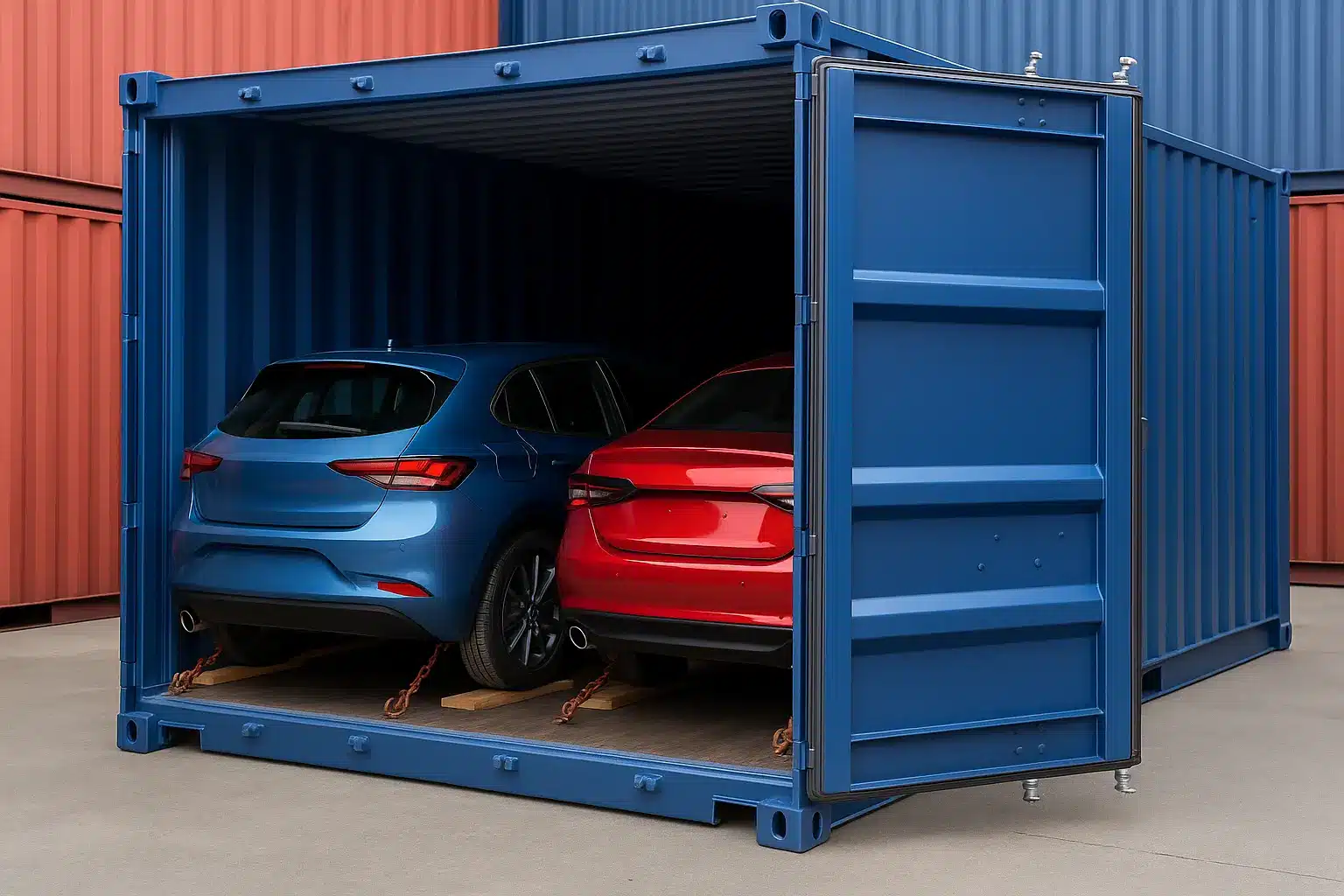
Container Shipping
Dedicated container for vehicles.
- Full container, maximum security
- Space for cars, machinery, or items
- Weather-protected and safe
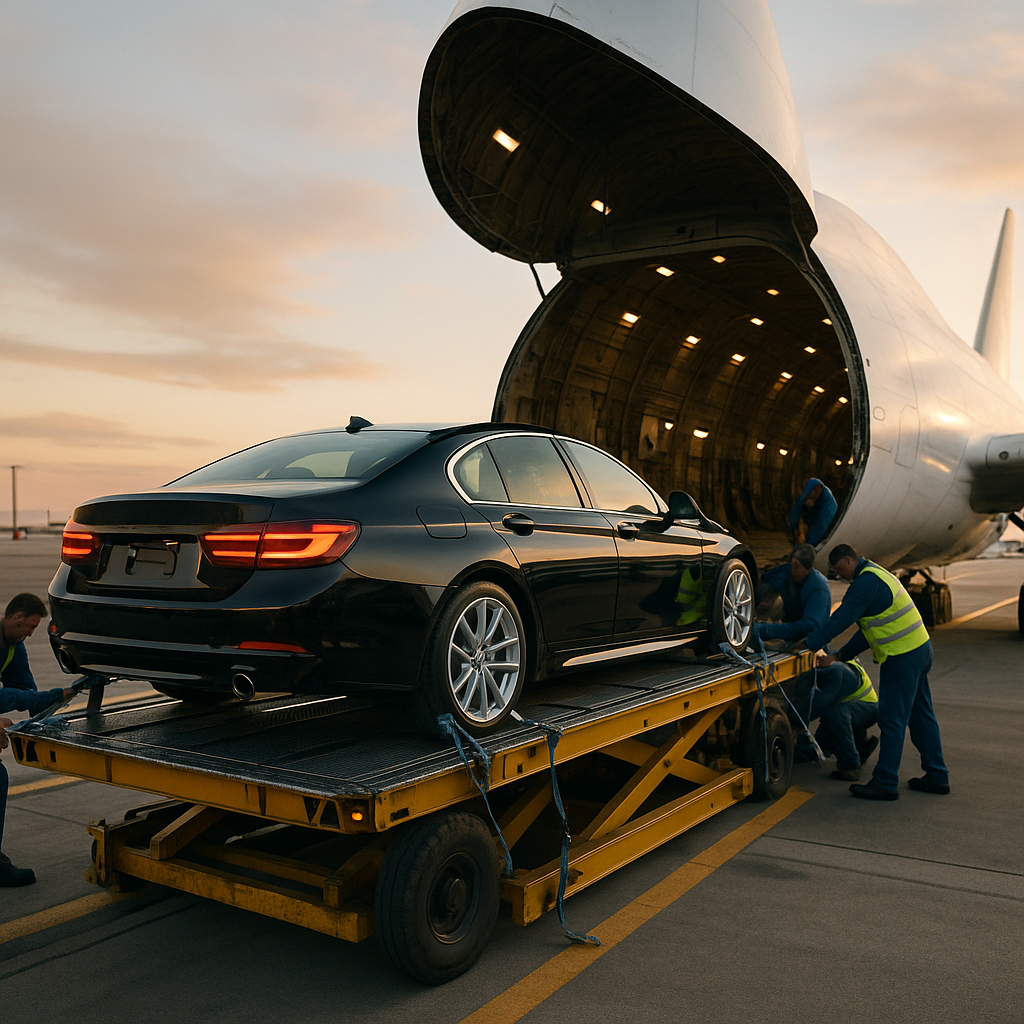
Air Shipping
Quick and safe air freight for vehicles.
- Door-to-door or airport-to-airport delivery
- Suitable for cars and luxury vehicles
- Get full protection for your vehicle
STEP 7: Then, Choose the Correct Shipping Method (RoRo, Container, or Air)
Next, choose the correct shipping method—or obtain accurate International Auto Transport Rates—based on destination regulations, vehicle type, transit urgency, and overall budget. At this stage, compliance and documentation accuracy matter far more than speed or price, as non-compliance can delay or block export approval.
Option A: Roll-On / Roll-Off (RoRo)
-
Vehicle must be running
-
No personal items allowed
-
Lower overall cost
-
Limited destination ports
-
Not available for all countries
RoRo works best for standard vehicles going to ports that allow drive-on/drive-off service.
Option B: Container Shipping
-
Vehicle secured inside a container
-
Required for many destinations
-
Often required for electric vehicles
-
Allows better protection
-
Higher likelihood of customs inspection
Container shipping works best when destination laws restrict RoRo or when additional protection is required.
Option C: Air Freight (Fastest Option)
-
Fastest shipping method available
-
Used for luxury, specialty, urgent, or high-value vehicle
-
Significantly higher cost than ocean shipping
-
Strict size, weight, and hazmat restrictions
-
Limited to vehicles that meet airline safety requirements
Air freight works best when time is critical and cost is secondary, such as diplomatic moves, urgent relocations, or high-value vehicle deliveries.
Therefore, destination regulations, vehicle specifications, urgency, and compliance requirements—not price alone—should guide your shipping method decision.
STEP 8:Shipping a car overseas Meanwhile, Prepare the Vehicle to Meet Port Standards
Meanwhile, prepare the vehicle to meet port and carrier standards.
Before delivery, ensure:
-
Less than ¼ tank of fuel
-
Fully charged and secured battery
-
Working brakes, doors, and windows
-
No fluid leaks
-
Height under 7 feet
-
Modifications disclosed
If the vehicle does not run, notify the exporter in advance so special handling can be arranged.
STEP 9: At the Same Time, Remove All Personal Items
At the same time, remove all personal items, because federal law strictly regulates vehicle contents.
Specifically prohibited items include:
-
Firearms and ammunition
-
Hazardous or flammable materials
-
Plants and agricultural products
Therefore, before loading:
-
Clean the vehicle thoroughly
-
Disconnect alarms
-
Remove non-retractable antennas
-
Remove garage door openers
-
Remove all personal items
Consequently, inspections proceed more smoothly.
STEP 10: Finally, Treat ETAs as Estimates and Plan for Inspections
Finally, understand that all shipping timelines are estimated times of arrival (ETAs).
In reality, delays may occur due to:
-
Weather
-
Port congestion
-
Vessel schedule changes
-
Documentation reviews
-
Customs inspections, especially for containers
For this reason, do not buy airline tickets based solely on ETA.
Customs Inspections and Costs
Importantly, Customs may inspect any shipment at any time.
When this happens:
-
The cargo owner usually pays
-
Fees may include labor, equipment, exams, and storage
-
Costs can reach thousands of dollars
Meanwhile, freight forwarders:
-
Do not control inspections
-
Do not set fees
-
Do not control timelines
-
Do not profit from inspections
Legal Authority Behind Customs Actions
To clarify, Customs authority comes from U.S. federal law:
-
19 U.S.C. § 1467 – Authorizes cargo examination
-
19 CFR Part 162 – Allows inspections and holds
-
19 CFR § 24.22 – Allows charges to be billed to the cargo owner
Therefore, Customs—not the exporter—controls inspections and costs.
How Much Does Shipping a Car Overseas Cost?
Typical ranges:
-
RoRo: $1,100 – $2,800
-
Container: $1,800 – $4,500
-
Air Freight: $8,000+
Final pricing depends on vehicle size, destination, port, and method.
Popular Destinations for Shipping a Car Overseas
-
-
Africa (Nigeria, Ghana, Kenya, South Africa)
-
Europe (Germany, Netherlands, UK)
-
Middle East (UAE, Saudi Arabia)
-
Asia (South Korea, Japan)
-
Common Mistakes to Avoid
-
Booking flights based on ETA
-
Putting the title inside the vehicle
-
Shipping personal items on RoRo
-
Using unlicensed exporters
-
Delivering to port without TWIC or escort
Why FMC Licensing Is Essential
Moreover, any company arranging ocean freight must be licensed by the Federal Maritime Commission (FMC).
As a result, FMC-licensed companies:
-
Operate legally
-
Carry financial bonds
-
Follow federal compliance rules
Accordingly, always verify licensing before booking.
Why Choose All TransportDepot Inc- When shipping a car overseas
Finally, All TransportDepot Inc no only provide International Auto Transport Rates But it also stands out as a fully licensed and bonded FMC NVOCC.
Specifically, All TransportDepot Inc:
-
Reviews titles and liens early
-
Explains Customs authority clearly
-
Provides realistic timelines
-
Handles RoRo and container exports globally
-
Supports gas, hybrid, electric, and non-running vehicles
As a result, clients ship with clarity and confidence.
⭐ BONUS POINT: Door-to-Port vs Self-Delivery — TWIC Cards, Port Escorts & Fees Explained
In addition to ocean shipping options, many licensed freight forwarders and NVOCCs—such as All TransportDepot Inc—offer door-to-port vehicle shipping.
For RoRo Shipping Services Understanding the difference between door-to-port and self-delivery helps you avoid denied port entry, delays, and unexpected costs.
Shipping a car overseas-What Door-to-Port Shipping Means
With door-to-port service:
-
Your vehicle is picked up directly from your home, dealership, or auction
-
A licensed carrier delivers it to the export terminal
-
RoRo Shipping Services ,You do not need port credentials
-
You avoid port access issues entirely
For this reason, door-to-port is often the simplest and lowest-risk option, especially for first-time exporters.
Shipping a car overseas-Choosing to Deliver the Vehicle Yourself? Read This Carefully.
If you choose to deliver the vehicle to the port yourself, For Overseas Car Relocation most U.S. marine terminals require secure access credentials.
In most cases, this means you must have a TWIC card — or arrange a paid port escort.
What Is a TWIC Card? Shipping a car overseas
A Transportation Worker Identification Credential (TWIC) is a security credential issued by the Transportation Security Administration (TSA).
A TWIC card:
-
Allows unescorted access to secure port facilities
-
Requires a background check and fingerprinting
-
Is mandatory for many self-deliveries to marine terminals
-
Takes time to process (often several weeks)
Without a TWIC card, terminals will deny unescorted entry.
Shipping a car overseas-No TWIC Card? You May Need a Port Escort (Extra Cost)
For RoRo Shipping Services or Overseas Car Relocation services ,If you do not have a TWIC card, some ports allow entry only with a port escort.
Important things to know about port escorts:
-
Escorts are not guaranteed
-
Availability depends on the terminal
-
Escort services are paid by the client
-
Fees typically range from $75 to $300+ per visit, depending on the port
-
Escorts must be scheduled in advance
-
Delays or missed appointments can result in rebooking fees
Because of this, relying on a port escort can become costly and unpredictable.
RoRo Shipping Services-Official TWIC Card Resources (Apply or Learn More)
Use these official links to learn more or apply:
-
🔗 TWIC Program Overview (TSA):
https://www.tsa.gov/for-industry/twic
International Auto Transport Rates-Why Many Clients Choose Door-to-Port Instead
For RoRo Shipping Services, Because of TWIC requirements and escort fees, many clients choose door-to-port shipping since it:
-
Eliminates the need for TWIC credentials
-
Avoids escort scheduling and costs during Overseas Car Relocation.
-
Reduces the risk of denied port entry
-
Keeps the export process smooth and compliant
In many cases, door-to-port service costs less overall than self-delivery once escort fees, time, and delays are considered.
Final Tip When shipping a car oversea
For Overseas Car Relocation. If you are deciding between or self-delivery and door-to-port for RoRo Shipping Services. To really know all in International Auto Transport Rates
-
Ask whether the terminal requires TWIC access
-
Confirm if port escorts are available
-
Compare escort fees versus pickup costs
-
Decide before moving the vehicle
A licensed exporter like All TransportDepot Inc can help you evaluate both options and choose the most efficient and compliant solution for your shipment. Prepare Customs clearance forms and Vehicle Export Paperwork.
Ready to Ship the Right Way?
Therefore, Get all your International shipping documents, if you want compliance, transparency, and realistic expectations, start with a licensed exporter for Overseas Car Relocation. This you can verify.
All TransportDepot Inc. is licensed and bonded with the Federal Maritime Commission.
Clients can independently verify credentials here:
👉 https://www.fmc.gov/oti-list/
If a company is not listed with the FMC, it is not legally authorized to arrange international ocean freight from the United States.
Shipping a car overseas is a regulated international export process that involves far more than simply booking space on a vessel. In fact, successful overseas car relocation depends on understanding international auto transport rates, as well as selecting the right shipping method—such as RoRo shipping services or container transport—and properly completing all required vehicle export paperwork in compliance with U.S. Customs regulations. Therefore, following the steps below in the correct order helps prevent delays, inspections, rejected exports, and unexpected costs.
📧 Email: ship@alltransportdepot.com
📞 Phone: +1 (678) 528-5794
📲 WhatsApp: +1 (470) 791-4497
🌐 Website: www.alltransportdepot.com
In summary:
When shipping a car overseas or for Overseas Car RelocationVerify licensing. Prepare early. Plan flexibly.
Ship with confidence — ship with All TransportDepot Inc.

Asif Iqbal serves as IT Manager & Export Services Coordinator with All TransportDepot Inc., an FMC-licensed and bonded NVOCC (License No. 021693). He supports the company’s technology systems, digital operations, shipment coordination, and export services across vehicle shipping, heavy machinery, containers, project cargo, and international ocean freight. His role combines operational technology with practical export support, helping streamline shipment information, documentation, routing, and customer service for cargo moving from the United States to destinations worldwide.