
⚡ Quick Answer: What is the best way to ship heavy machinery from the USA to Europe?
Heavy machinery can move from the USA to Europe by RORO, container, flat rack, or breakbulk, depending on whether the unit is self-propelled, its transport dimensions, operating weight, and destination port. Major European gateways include Bremerhaven, Antwerp-Bruges, Rotterdam, Southampton, Barcelona, Valencia, Genoa and other carrier-specific terminals. Exact acceptance depends on the machine profile and the rules of the destination country.
USA → EUROPE HEAVY MACHINERY SHIPPING SERVICES
All TransportDepot coordinates export logistics for excavators, bulldozers, loaders, cranes, agricultural machinery, commercial equipment and oversized project cargo moving from the United States to Europe. Our services cover route planning, machinery preparation, port selection and the differences between RORO, container, flat rack and breakbulk shipping.
Heavy Machinery Shipping Calculator
Loading........
Commodity Description
Unit System
QTY
Length (m)
Width (m)
Height (m)
Weight (KG)
Volume
0.00Estimated Total
0.00
Client Info – Associated With Quote Request
Europe Heavy Machinery Shipping Methods
Heavy Equipment Shipping Methods
When shipping heavy equipment, you can choose between RoRo (Roll-on/Roll-off), container shipping, or breakbulk/flat rack options. The best method depends on the equipment type, size, weight, budget, and the level of protection or handling required during transit.
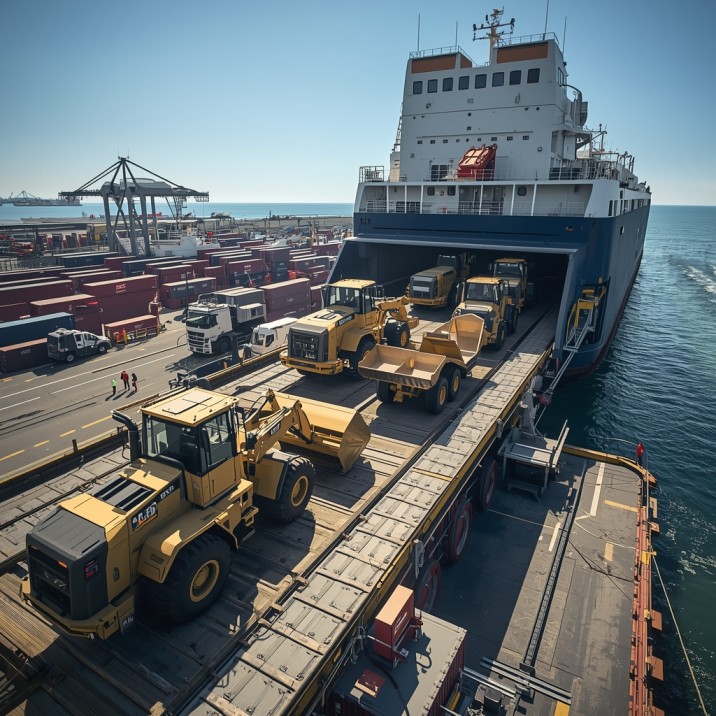
RoRo (Roll-on/Roll-off)
Best for drivable machinery
- Drive-on, drive-off convenience
- CAT loaders, dump trucks, tractors
- Most cost-effective option
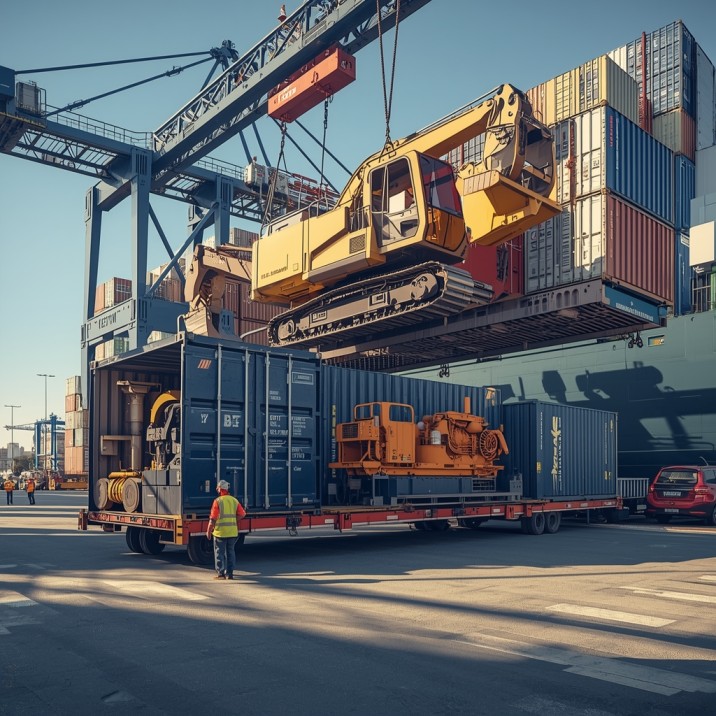
Container Shipping
Good for compact machinery
- Full container, maximum security
- Space for cars, machinery, or items
- Weather-protected and safe
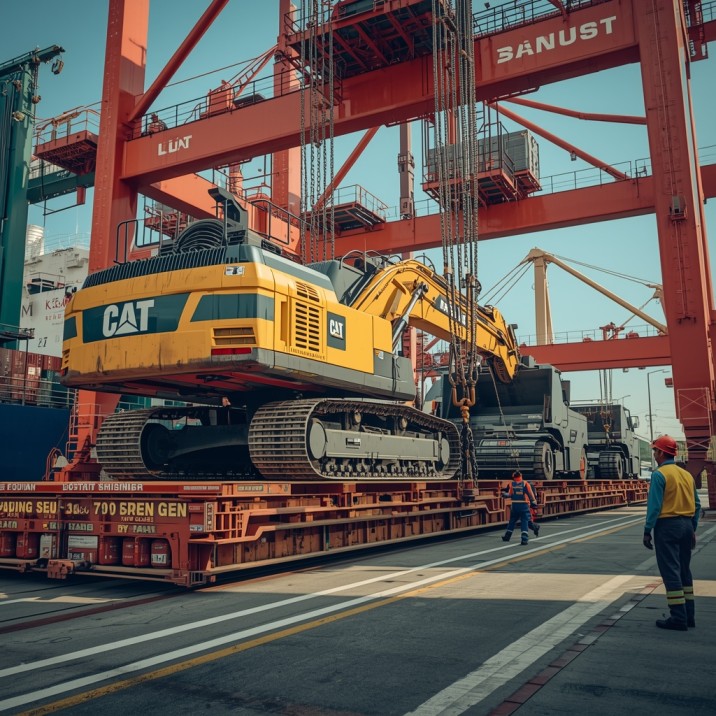
Breakbulk / Flat Rack Shipping
Designed for oversized heavy equipment
- Suitable for large excavators and cranes
- Custom lifting and secure stowage
- Get full protection for your vehicle
Self-propelled units may qualify for RORO where the carrier and terminal accept the machine. Compact equipment may move in a standard or high-cube container after permitted preparation. Out-of-gauge machinery may require flat rack, while very large or non-standard project cargo can require breakbulk service.
Major European Destination Ports
Bremerhaven, Germany
Major European vehicle and rolling-cargo gateway with strong inland connections.
Antwerp-Bruges, Belgium
Large multipurpose port handling RORO, containers and project cargo.
Rotterdam, Netherlands
Major container and industrial gateway with broad European distribution links.
Southampton, United Kingdom
Important UK RORO and vehicle-handling gateway for selected services.
Barcelona & Valencia, Spain
Mediterranean gateways for rolling equipment, containers and commercial cargo.
Genoa, Italy
Key Italian gateway for machinery and industrial cargo moving into Southern Europe.
European Import & Customs Planning
Import treatment varies by country. Before shipping, confirm the destination country’s customs valuation, VAT or duty treatment, emissions or machinery compliance requirements, temporary-import rules where applicable, and whether cleaning or inspection is required for used agricultural or construction equipment.
Use the main Heavy Machinery Shipping to Europe hub for regional routing, and review the relevant country page before booking.
How to Prepare Heavy Machinery for Europe
- Confirm exact length, width, height and operating weight.
- Provide year, make, model, serial number and clear photos.
- Confirm whether the machine starts, steers, brakes and moves under its own power.
- Remove loose tools, debris and undeclared cargo.
- Secure booms, blades, buckets, forks and removable attachments.
- Confirm destination-country import eligibility before port delivery.
Heavy Machinery Commonly Shipped to Europe
Construction Equipment
Excavators, bulldozers, wheel loaders, backhoes, skid steers and graders.
Agricultural Machinery
Tractors, combines, harvesters, sprayers, balers and farm attachments.
Industrial & Project Cargo
Cranes, generators, compressors, pumps, telehandlers and specialized machinery.
Heavy Machinery Shipping Destinations in Europe
Germany · France · Spain · Italy · Switzerland
For worldwide service information, visit Heavy Machinery Shipping Services.
Request a Europe Heavy Machinery Shipping Quote
Send the machine year, make, model, dimensions, weight, running condition, pickup ZIP code, destination country and photos for a route-specific review.

Asif Iqbal serves as IT Manager & Export Services Coordinator with All TransportDepot Inc., an FMC-licensed and bonded NVOCC (License No. 021693). He supports the company’s technology systems, digital operations, shipment coordination, and export services across vehicle shipping, heavy machinery, containers, project cargo, and international ocean freight. His role combines operational technology with practical export support, helping streamline shipment information, documentation, routing, and customer service for cargo moving from the United States to destinations worldwide.