
⚡ Quick Answer: How do I ship cranes from the USA overseas?
Mobile, rough-terrain and crawler cranes can be exported from the USA using RORO, flat rack, breakbulk or project cargo. Typical brands include Liebherr, Grove, Tadano, Manitowoc and Terex. Crane shipping is highly dimension-sensitive because booms, counterweights, jibs and outriggers may need to move separately.
INTERNATIONAL CRANES SHIPPING FROM USA
Cranes are among the most planning-intensive heavy-equipment exports because a single machine can become several cargo pieces once the boom, counterweights, hook blocks and accessories are separated for transport. All TransportDepot coordinates U.S. pickup, component planning, terminal delivery and ocean freight for mobile, rough-terrain and crawler cranes. The final method is chosen only after reviewing the complete component list, lifting points and destination-port handling capability.
Get Your Shipping Rates
Find instant rates online for most destinations or contact our team for assistance.
Find Instant Rates Online
View available shipping rates to most destinations using our online vehicle rate calculator.
Call Our Shipping Team
Speak directly with a vehicle shipping specialist for assistance with your shipment.
Contact Our Team
Get quick shipping assistance through live chat, WhatsApp or email.
Heavy Machinery Shipping Calculator
Loading........
Commodity Description
Unit System
QTY
Length (m)
Width (m)
Height (m)
Weight (KG)
Volume
0.00Estimated Total
0.00
Client Info – Associated With Quote Request
Cranes We Ship Internationally
We ship mobile, rough-terrain, crawler and all-terrain cranes plus related components.
Rough-Terrain Cranes
Job-site cranes for construction and industrial lifting.
All-Terrain Cranes
Road-mobile cranes for major lifting projects.
Crawler Cranes
Tracked cranes for heavy industrial and infrastructure work.
Common Cranes Brands & Models
| Brand | Representative Models | Typical Use |
|---|---|---|
| Grove | RT and GMK series | Construction / industrial |
| Liebherr | LTM and LRT series | Heavy lifting |
| Tadano | GR and AC series | Project lifting |
| Manitowoc | Crawler crane series | Infrastructure |
Best Shipping Methods for Cranes
RORO
Possible for self-propelled mobile cranes within carrier limits and with transport configuration approved.
Container / Flat Rack
Used for crane components, smaller units, counterweights and accessories.
Breakbulk / Project Cargo
Common for large cranes and multi-piece project shipments requiring vessel lifting.
How to Prepare Cranes for International Shipping
- Prepare a complete component and weight list.
- Secure or remove boom sections and jibs as required.
- List counterweights separately.
- Mark lifting points and attachment pieces.
- Photograph every component before handover.
Documents Required to Export Cranes
U.S. Export Side
- Commercial invoice or bill of sale
- Ownership/title evidence when applicable
- Year, make, model and serial number
- Exact dimensions and operating weight
- Exporter and consignee details
- AES / EEI information when required
- Carrier and terminal forms
Destination Side
- Commercial invoice and transport document
- Importer / customs broker information
- HS classification and customs declaration
- Machine specification sheet where required
- Import permits, inspection or registration documents where applicable
- Proof of duties/taxes paid before release when required
Information Needed for a Cranes Shipping Quote
- Year, make and model
- Serial number
- Exact length, width and height
- Operating weight
- Running or non-running condition
- Pickup ZIP code or current location
- Destination country and preferred port
- Clear photos plus attachment details
Heavy Equipment Shipping Methods
When shipping heavy equipment, you can choose between RoRo (Roll-on/Roll-off), container shipping, or breakbulk/flat rack options. The best method depends on the equipment type, size, weight, budget, and the level of protection or handling required during transit.
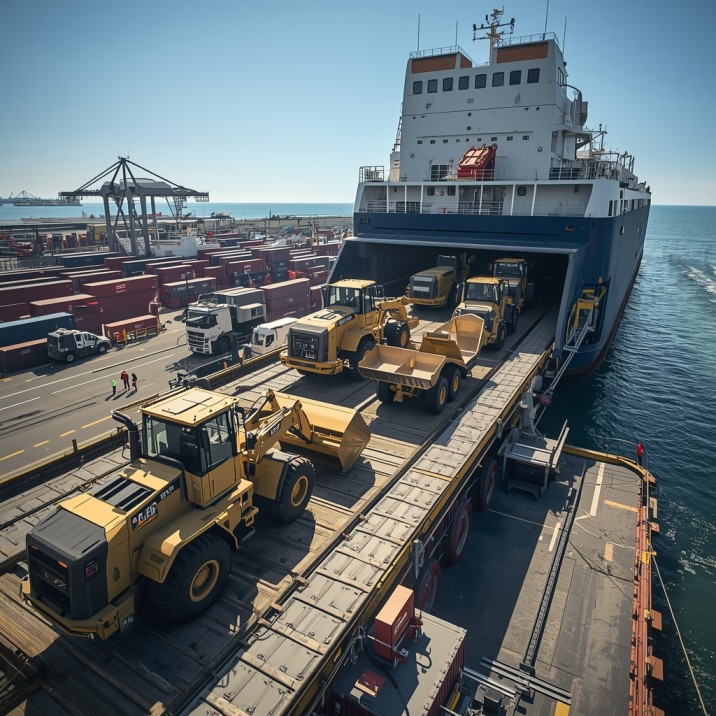
RoRo (Roll-on/Roll-off)
Best for drivable machinery
- Drive-on, drive-off convenience
- CAT loaders, dump trucks, tractors
- Most cost-effective option
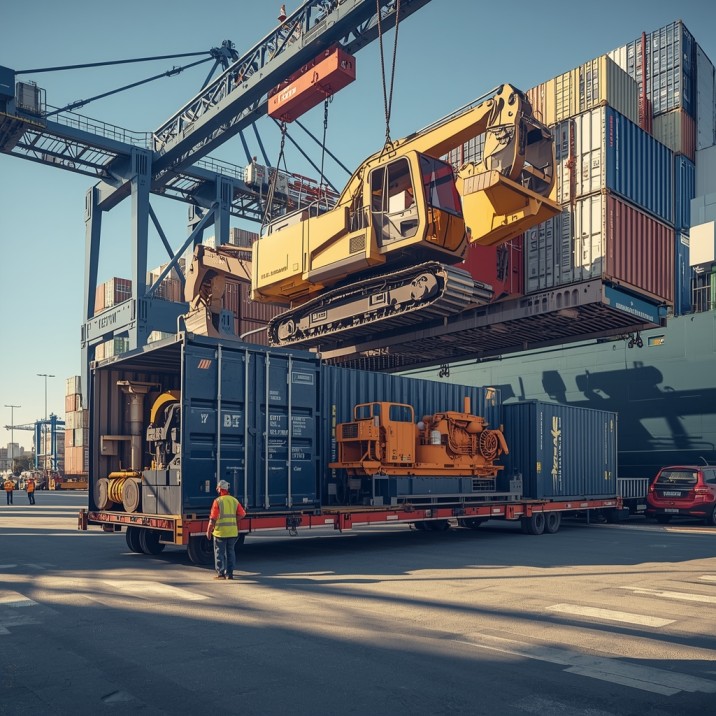
Container Shipping
Good for compact machinery
- Full container, maximum security
- Space for cars, machinery, or items
- Weather-protected and safe
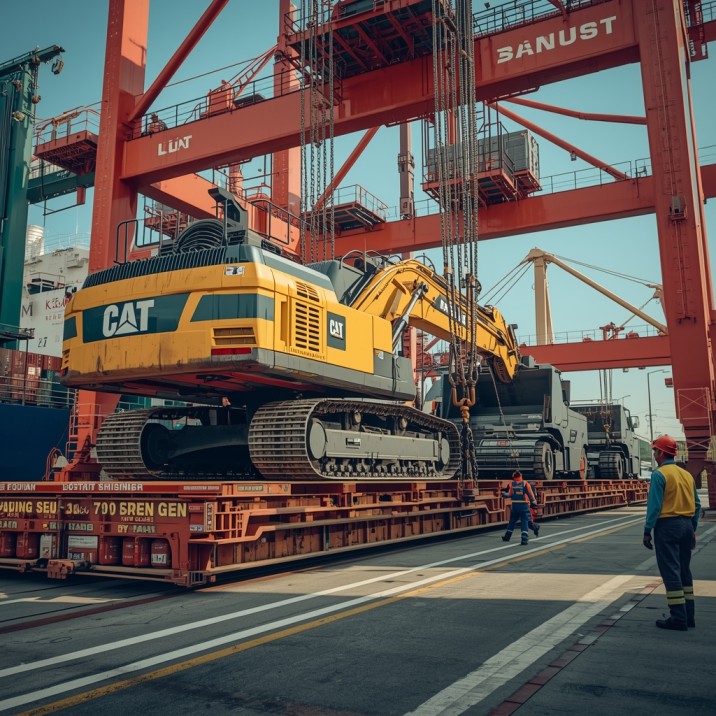
Breakbulk / Flat Rack Shipping
Designed for oversized heavy equipment
- Suitable for large excavators and cranes
- Custom lifting and secure stowage
- Get full protection for your vehicle
Frequently Asked Questions About Cranes Shipping
Can non-running cranes be shipped overseas?
Yes. Non-running equipment may require towing, lifting, flat rack or breakbulk handling instead of standard RORO.
Can attachments ship with the machine?
Usually yes, but buckets, forks, blades, headers, booms or other attachments should be measured, listed and secured according to carrier requirements.
What determines the shipping cost?
Cost depends on dimensions, weight, running condition, pickup location, destination port, shipping method, terminal handling and current carrier rates.
Which shipping method is best?
The best method depends on the exact unit. Operable machines may suit RORO, compact units may fit a container, and oversized machines may need flat rack or breakbulk.
For destination-specific routes and worldwide heavy-equipment export support, visit our Heavy Machinery Shipping Services hub.

Asif Iqbal serves as IT Manager & Export Services Coordinator with All TransportDepot Inc., an FMC-licensed and bonded NVOCC (License No. 021693). He supports the company’s technology systems, digital operations, shipment coordination, and export services across vehicle shipping, heavy machinery, containers, project cargo, and international ocean freight. His role combines operational technology with practical export support, helping streamline shipment information, documentation, routing, and customer service for cargo moving from the United States to destinations worldwide.