
⚡ Quick Answer: How do I ship heavy machinery to South Korea from the USA?
South Korea receives excavators, wheel loaders, forklifts, telehandlers, cranes and industrial equipment through Busan, Incheon and other major ports. Container, RORO, flat rack or breakbulk can be used depending on equipment dimensions and final destination.
USA → SOUTH KOREA HEAVY MACHINERY SHIPPING
South Korea’s highly developed ports and industrial infrastructure provide several efficient routes for imported machinery. All TransportDepot coordinates excavators, loaders, forklifts, telehandlers, cranes and industrial equipment from U.S. sellers to Korean gateways. Busan offers extensive international connectivity, while Incheon can be practical for Seoul-area projects. We choose the route after reviewing final delivery location and equipment dimensions.
Get Your Shipping Rates
Find instant rates online for most destinations or contact our team for assistance.
Find Instant Rates Online
View available shipping rates to most destinations using our online vehicle rate calculator.
Call Our Shipping Team
Speak directly with a vehicle shipping specialist for assistance with your shipment.
Contact Our Team
Get quick shipping assistance through live chat, WhatsApp or email.
Heavy Machinery Shipping Calculator
Loading........
Commodity Description
Unit System
QTY
Length (m)
Width (m)
Height (m)
Weight (KG)
Volume
0.00Estimated Total
0.00
Client Info – Associated With Quote Request
South Korea Ports & Heavy Machinery Gateways
Busan and Incheon are the principal gateways for many international machinery shipments.
Port of Busan
Major global container and project-cargo gateway serving southern and nationwide markets.
Port of Incheon
Key gateway for Seoul, Incheon and northern industrial regions.
Pyeongtaek-Dangjin
Important automotive, RORO and industrial port serving central-western Korea.
South Korea Customs & Import Rules for Heavy Machinery
Imports generally require customs declaration, commercial documentation, tariff classification and importer details. Machinery may also be subject to standards, emissions, safety or registration requirements depending on intended use. The importer should confirm current Korean requirements before export.
How to Prepare Heavy Machinery for Shipping to South Korea
- Confirm year, make, model, serial number, exact dimensions and operating weight.
- Clean the equipment and remove soil, vegetation, debris and excessive grease.
- Repair active oil, fuel, coolant or hydraulic leaks.
- Secure buckets, blades, forks, booms and detachable accessories.
- For RORO, verify the machine starts, steers and brakes.
- Photograph the equipment before pickup and terminal handover.
Documents Required for Heavy Machinery Shipping to South Korea
U.S. Export Documents
- Commercial invoice or bill of sale
- Ownership/title evidence when applicable
- Year, make, model and serial number
- Dimensions, weight and condition
- Exporter and consignee information
- AES / EEI when required
- Carrier and terminal forms
South Korea Arrival Documents
- Commercial invoice and transport document
- Importer / broker information
- HS classification and customs declaration
- Permits, inspections, conformity or registration documents where required
- Proof of applicable duties/taxes paid before release where required
Types of Heavy Machinery We Ship to South Korea
Excavators
Construction.
Wheel Loaders
Aggregate.
Bulldozers
Site work.
Forklifts
Logistics.
Telehandlers
Construction.
Generators
Power support.
Popular Heavy Machinery for South Korea Projects
| Type | Brands / Models | Typical Use |
|---|---|---|
| Excavators | CAT 320, Komatsu PC210 | Construction |
| Wheel Loaders | CAT 950, Volvo L90 | Aggregate |
| Bulldozers | CAT D6 | Site work |
| Forklifts | Toyota, Hyster | Logistics |
| Telehandlers | JCB, Manitou | Construction |
| Generators | Caterpillar, Cummins | Power |
Heavy Equipment Shipping Methods
When shipping heavy equipment, you can choose between RoRo (Roll-on/Roll-off), container shipping, or breakbulk/flat rack options. The best method depends on the equipment type, size, weight, budget, and the level of protection or handling required during transit.
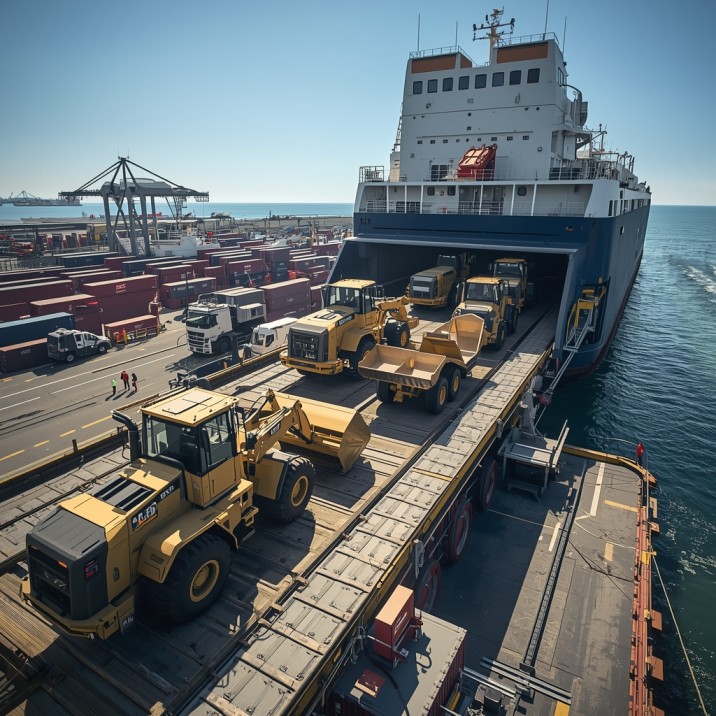
RoRo (Roll-on/Roll-off)
Best for drivable machinery
- Drive-on, drive-off convenience
- CAT loaders, dump trucks, tractors
- Most cost-effective option
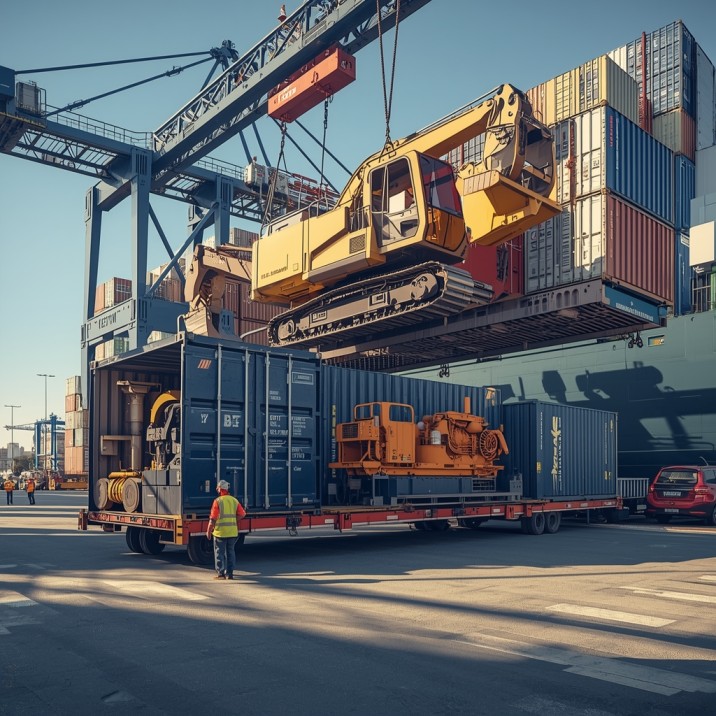
Container Shipping
Good for compact machinery
- Full container, maximum security
- Space for cars, machinery, or items
- Weather-protected and safe
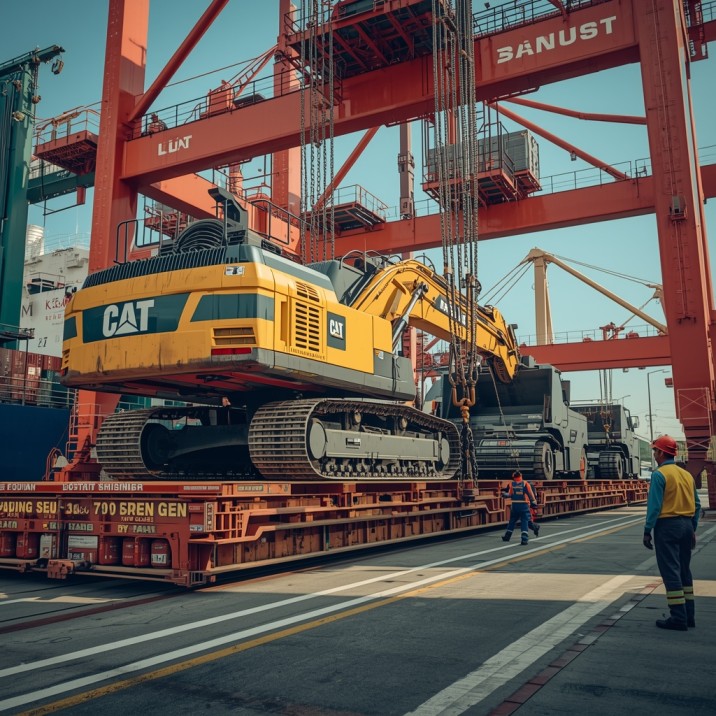
Breakbulk / Flat Rack Shipping
Designed for oversized heavy equipment
- Suitable for large excavators and cranes
- Custom lifting and secure stowage
- Get full protection for your vehicle
Frequently Asked Questions About Shipping Heavy Machinery to South Korea
What information is needed for a quote?
Send year, make, model, serial number, dimensions, operating weight, running condition, pickup ZIP code, destination and photos.
Can non-running equipment be shipped?
Yes. Non-running machinery may require towing, lifting, flat rack or breakbulk handling.
Which shipping method is best?
It depends on size, condition, port service and final destination. RORO, container, flat rack and breakbulk are all possible.
Should import rules be checked before sailing?
Yes. Confirm customs eligibility, duties/taxes, standards, permits and importer requirements before export.
Explore the Asia Heavy Machinery Shipping hub or return to our Heavy Machinery Shipping Services hub.

Ian Miriams is part of All TransportDepot Inc., an FMC-licensed and bonded NVOCC (License No. 021693) with more than 20 years of experience in international shipping and export logistics. The company handles vehicle shipping, RoRo, containerized cargo, heavy machinery and equipment, boats and yachts, inland transportation, and commercial ocean freight. Through major U.S. ports and international carrier networks, All TransportDepot Inc. supports individuals, dealers, exporters, businesses, and project cargo customers shipping from the United States to destinations worldwide.