
⚡ Quick Answer: How do I ship heavy machinery to Philippines from the USA?
Philippines-bound machinery commonly includes excavators, backhoes, wheel loaders, bulldozers, forklifts and generators. Manila handles much of the country’s commercial cargo, while Batangas, Subic, Cebu and Davao can reduce inland or inter-island movement for selected projects.
USA → PHILIPPINES HEAVY MACHINERY SHIPPING
The Philippines is an archipelago, so the best heavy-machinery port is often the one closest to the final island or project—not simply Manila. All TransportDepot coordinates excavators, backhoes, loaders, dozers, forklifts and generators from U.S. pickup points to Philippine gateways. We compare Manila, Batangas, Subic, Cebu and southern routes according to the final job site and carrier schedule.
Get Your Shipping Rates
Find instant rates online for most destinations or contact our team for assistance.
Find Instant Rates Online
View available shipping rates to most destinations using our online vehicle rate calculator.
Call Our Shipping Team
Speak directly with a vehicle shipping specialist for assistance with your shipment.
Contact Our Team
Get quick shipping assistance through live chat, WhatsApp or email.
Heavy Machinery Shipping Calculator
Loading........
Commodity Description
Unit System
QTY
Length (m)
Width (m)
Height (m)
Weight (KG)
Volume
0.00Estimated Total
0.00
Client Info – Associated With Quote Request
Philippines Ports & Heavy Machinery Gateways
Multiple gateways serve Luzon, Visayas and Mindanao.
Manila
Primary commercial gateway serving Metro Manila and much of Luzon.
Batangas / Subic
Alternative Luzon gateways useful for selected vehicles and project cargo.
Cebu / Davao
Regional gateways for Visayas and Mindanao projects.
Philippines Customs & Import Rules for Heavy Machinery
Machinery imports require customs declaration, commercial documents, HS classification, importer information and applicable duties/taxes. Used-equipment age, condition, registration or inspection rules may apply. The importer should verify current Philippine requirements before shipment.
How to Prepare Heavy Machinery for Shipping to Philippines
- Confirm year, make, model, serial number, exact dimensions and operating weight.
- Clean the equipment and remove soil, vegetation, debris and excessive grease.
- Repair active oil, fuel, coolant or hydraulic leaks.
- Secure buckets, blades, forks, booms and detachable accessories.
- For RORO, verify the machine starts, steers and brakes.
- Photograph the equipment before pickup and terminal handover.
Documents Required for Heavy Machinery Shipping to Philippines
U.S. Export Documents
- Commercial invoice or bill of sale
- Ownership/title evidence when applicable
- Year, make, model and serial number
- Dimensions, weight and condition
- Exporter and consignee information
- AES / EEI when required
- Carrier and terminal forms
Philippines Arrival Documents
- Commercial invoice and transport document
- Importer / broker information
- HS classification and customs declaration
- Permits, inspections, conformity or registration documents where required
- Proof of applicable duties/taxes paid before release where required
Types of Heavy Machinery We Ship to Philippines
Excavators
Construction.
Wheel Loaders
Aggregate.
Bulldozers
Site work.
Forklifts
Logistics.
Telehandlers
Construction.
Generators
Power support.
Popular Heavy Machinery for Philippines Projects
| Type | Brands / Models | Typical Use |
|---|---|---|
| Excavators | CAT 320, Komatsu PC210 | Construction |
| Wheel Loaders | CAT 950, Volvo L90 | Aggregate |
| Bulldozers | CAT D6 | Site work |
| Forklifts | Toyota, Hyster | Logistics |
| Telehandlers | JCB, Manitou | Construction |
| Generators | Caterpillar, Cummins | Power |
Heavy Equipment Shipping Methods
When shipping heavy equipment, you can choose between RoRo (Roll-on/Roll-off), container shipping, or breakbulk/flat rack options. The best method depends on the equipment type, size, weight, budget, and the level of protection or handling required during transit.
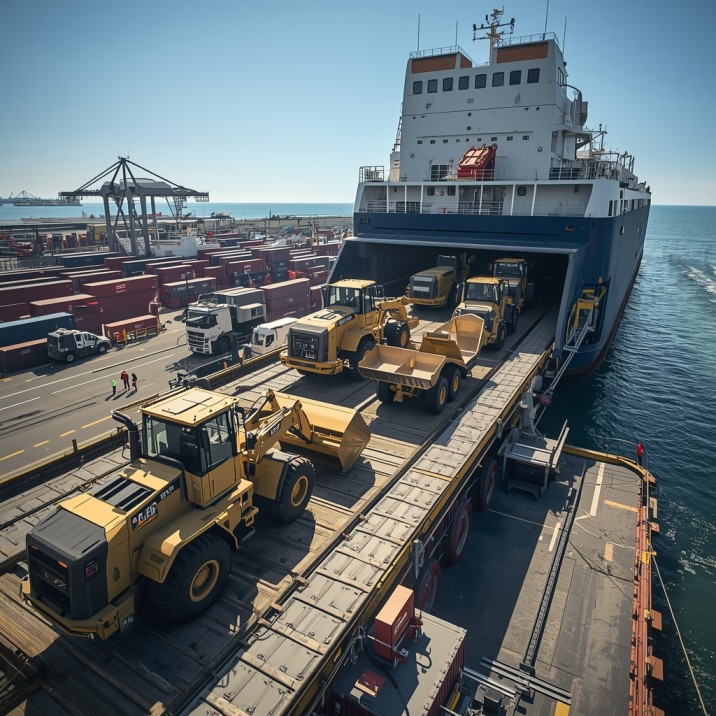
RoRo (Roll-on/Roll-off)
Best for drivable machinery
- Drive-on, drive-off convenience
- CAT loaders, dump trucks, tractors
- Most cost-effective option
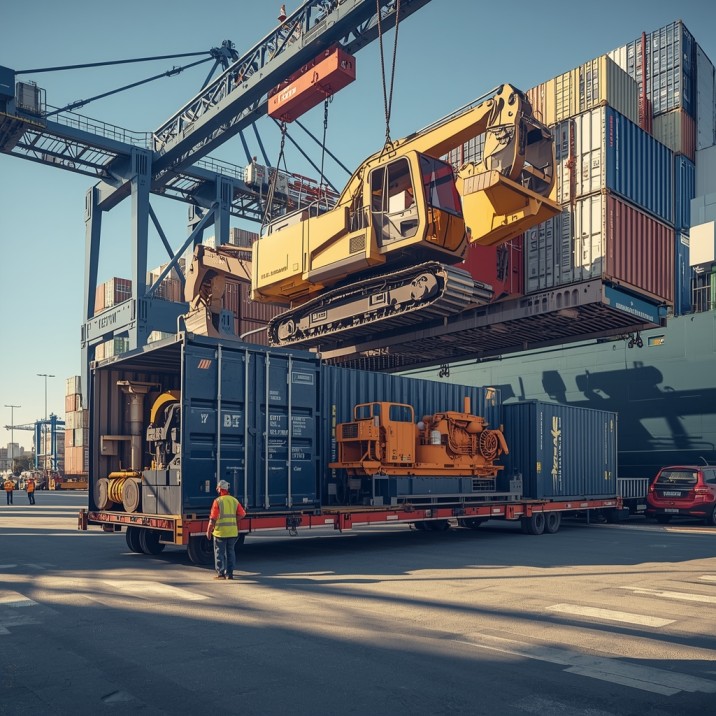
Container Shipping
Good for compact machinery
- Full container, maximum security
- Space for cars, machinery, or items
- Weather-protected and safe
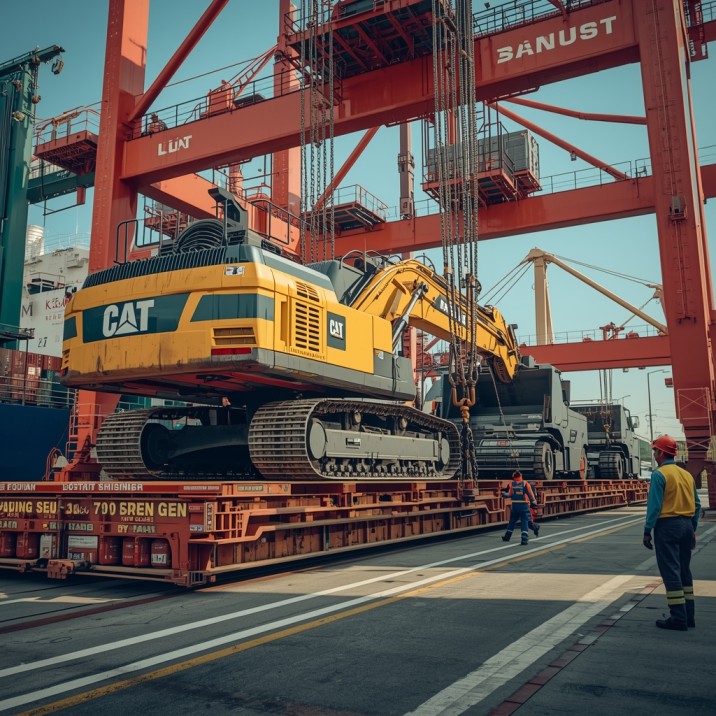
Breakbulk / Flat Rack Shipping
Designed for oversized heavy equipment
- Suitable for large excavators and cranes
- Custom lifting and secure stowage
- Get full protection for your vehicle
Frequently Asked Questions About Shipping Heavy Machinery to Philippines
What information is needed for a quote?
Send year, make, model, serial number, dimensions, operating weight, running condition, pickup ZIP code, destination and photos.
Can non-running equipment be shipped?
Yes. Non-running machinery may require towing, lifting, flat rack or breakbulk handling.
Which shipping method is best?
It depends on size, condition, port service and final destination. RORO, container, flat rack and breakbulk are all possible.
Should import rules be checked before sailing?
Yes. Confirm customs eligibility, duties/taxes, standards, permits and importer requirements before export.
Explore the Asia Heavy Machinery Shipping hub or return to our Heavy Machinery Shipping Services hub.

Ian Miriams serves as Project Cargo & Commercial Freight Coordinator with All TransportDepot Inc., an FMC-licensed and bonded NVOCC (License No. 021693). He supports commercial ocean freight, heavy machinery transport, vehicle shipping, container service, and project cargo movements, with attention to cargo dimensions, equipment condition, carrier requirements, terminal acceptance, documentation, and destination handling. All TransportDepot Inc. manages export logistics from the United States to destinations worldwide.