



Are you looking to ship heavy equipment to Japan from the USA? Whether you need to ship heavy construction equipment to Japan, ship industrial equipment to Japan, ship agricultural and mining machinery to Japan, or move commercial trucks and vehicles, All TransportDepot Inc. delivers reliable export solutions as a licensed FMC NVOCC to ship commercial trucks to Japan. In addition, we regularly ship agricultural and mining equipment to Japan, supporting projects across construction, manufacturing, energy, and infrastructure sectors. From export documentation to ocean freight coordination, we manage every step of the process. As a result, your equipment arrives in Japan safely, securely, and on schedule.
Shipping heavy equipment to Japan typically costs between $4,000 and $14,500; however, final pricing varies based on several key factors, including the equipment’s size, weight, overall dimensions, selected shipping method (RoRo or container), and the U.S. departure port. In addition, market conditions, vessel availability, and port handling requirements may also influence the final rate.
Therefore, with transparent pricing, detailed cost breakdowns, and personalized quotes, All TransportDepot Inc. simplifies the process from start to finish. Moreover, our experienced team manages documentation, export compliance, and carrier coordination, ensuring your heavy equipment ships securely, efficiently, and on schedule without unexpected fees or delays.
🚢 Ship with Confidence. Partner with Top NVOCCs and leading global ocean carriers. 👉 Get a Rate: 👉 Place Your Order: 📲 WhatsApp: +1 (470) 791 4497
https://alltransportdepot.com/roro-shipping-cost/
https://alltransportdepot.com/place-order/
📞 Call: +1 (678) 528 5794
📧 Email: ship@alltransportdepot.com
Heavy Equipment Shipping Methods
When shipping heavy equipment, you can choose between RoRo (Roll-on/Roll-off), container shipping, or breakbulk/flat rack options. The best method depends on the equipment type, size, weight, budget, and the level of protection or handling required during transit.
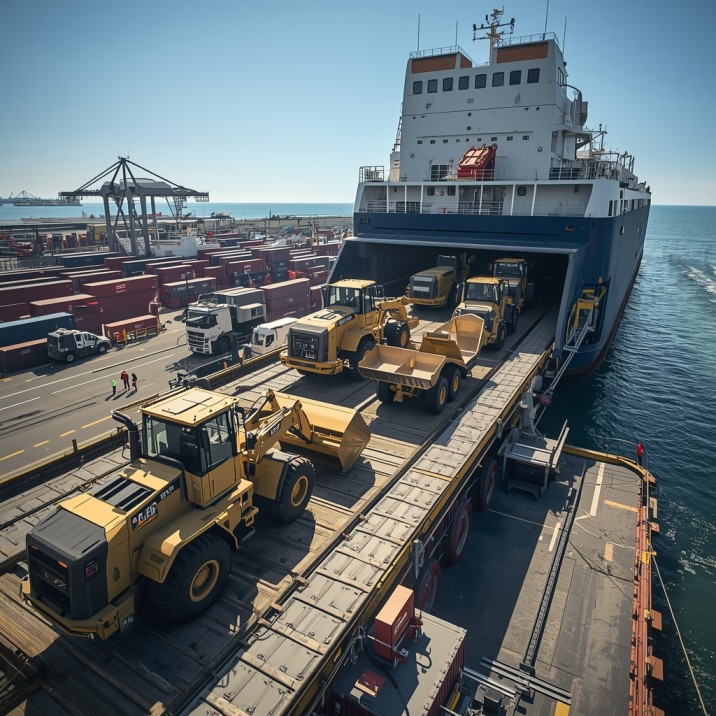
RoRo (Roll-on/Roll-off)
Best for drivable machinery
- Drive-on, drive-off convenience
- CAT loaders, dump trucks, tractors
- Most cost-effective option
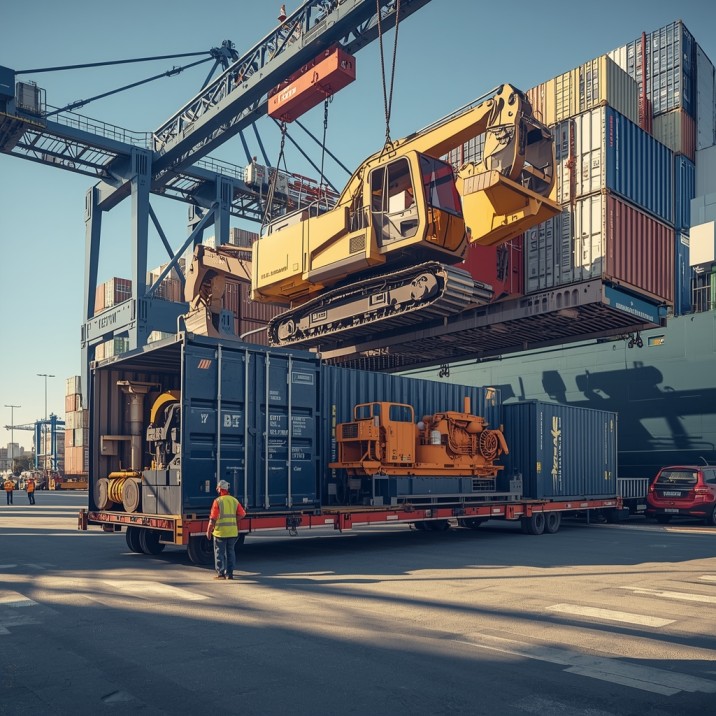
Container Shipping
Good for compact machinery
- Full container, maximum security
- Space for cars, machinery, or items
- Weather-protected and safe
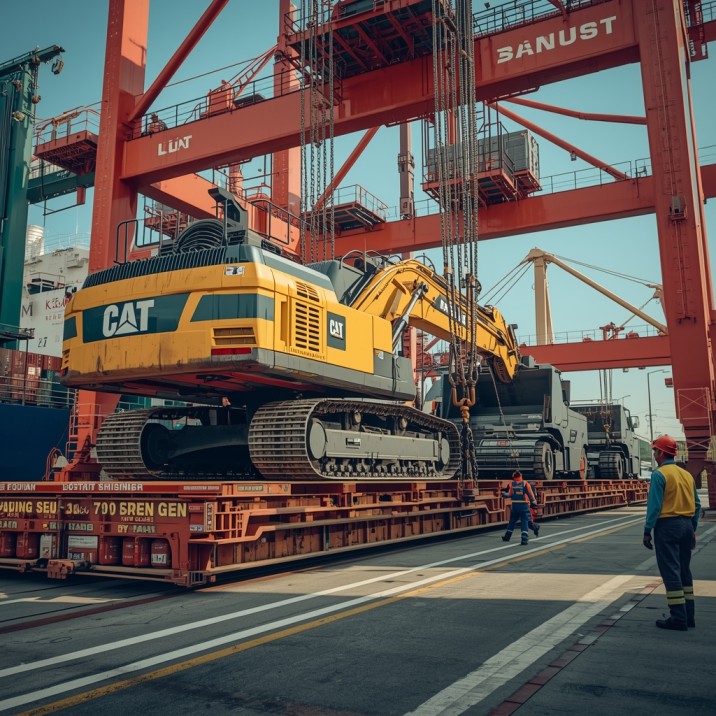
Breakbulk / Flat Rack Shipping
Designed for oversized heavy equipment
- Suitable for large excavators and cranes
- Custom lifting and secure stowage
- Get full protection for your vehicle
🚢 Ship with Confidence. Partner with world renowned NVOCCs and leading global ocean carriers.
👉 Get a Rate:
https://alltransportdepot.com/roro-shipping-cost/
👉 Place Your Order:
https://alltransportdepot.com/place-order/
📲 WhatsApp: +1 (470) 791-4497
📞 Call: +1 (678) 528-5794
📧 Email: ship@alltransportdepot.com
All TransportDepot Inc.
FMC Licensed & Bonded NVOCC #021693
Cost to Ship Heavy Equipment
Shipping costs for heavy equipment depend on several key factors related to the machine and shipping method. Larger and heavier equipment typically requires higher handling and freight charges.
Excavator Shipping Cost to Nigeria (RoRo)
Operational excavators such as CAT 320, 330, 336, Komatsu PC200/PC300, and similar mid-size units are commonly shipped via RoRo.
How excavators are rated for RoRo:
Tracked equipment. Excavators are rated based on operational status, overall dimensions, and track width. Units are driven or guided onto the vessel under their own power and secured in place.
Estimated RoRo price range (USA → ):
USD $8,500 – $14,500
Factors affecting price include:
-
Operating weight
-
Track width
-
Height clearance
-
Export port (e.g., Savannah, Baltimore, Houston)
Excavators shipped to Lagos (Apapa or Tin Can Island) typically fall within this range when fully operational.
Bulldozer Shipping Cost to
Bulldozers such as CAT D6, D7, Komatsu D65, and similar units are well suited for RoRo shipping if running and steerable.
How bulldozers are rated for RoRo:
Tracked and self-propelled. Bulldozers are rated by blade width, overall length, weight, and operational condition. Units must be able to move under their own power.
Estimated RoRo price range:
USD $10,500 – $18,500
Larger bulldozers (D8 and above) may exceed standard RoRo limits and require specialized handling, which increases cost.
Wheel Loader Shipping Cost to
Wheel loaders like CAT 950, 966, Volvo L90/L120, and Komatsu WA-series loaders are frequently shipped to for construction and port operations.
How wheel loaders are rated for RoRo:
Wheeled and self-driven. Pricing is based on overall dimensions, operating weight, and axle configuration. Wheel loaders are among the easiest machines to rate and load for RoRo.
Estimated RoRo price range:
USD $9,000 – $15,500
Wheel loaders are among the most cost-efficient machines to ship via RoRo due to their mobility and balanced dimensions.
Backhoe Loader Shipping Cost to
Backhoe loaders such as JCB 3CX/4CX, CAT 420/430, and Case 580 are some of the most commonly imported machines into .
How backhoe loaders are rated for RoRo:
Wheeled and self-driven. Backhoes are rated based on length, height, weight, and bucket positioning. Their compact footprint makes them ideal for RoRo vessels.
Estimated RoRo price range:
USD $6,500 – $11,500
Their compact size and strong demand in make backhoes ideal for RoRo shipping.
Dump Truck & Heavy Truck Shipping Cost to
Dump trucks and heavy-duty trucks (Volvo, Mack, Freightliner, Kenworth) ship efficiently via RoRo since they are road-ready.
How trucks are rated for RoRo:
Road-driven vehicles. Trucks are rated based on axle count, overall height, length, and whether the unit runs and drives. Non-running trucks may require towing, which affects cost.
Estimated RoRo price range:
USD $7,500 – $13,500
Pricing depends on:
-
Axle configuration
-
Overall height
-
Whether the truck runs and drives
Forklift Shipping Cost to
Forklifts and material handling equipment (Toyota, Hyster, Yale, Mitsubishi) are frequently shipped for warehouses, ports, and factories.
How forklifts are rated for RoRo:
Wheeled and self-driven. Forklifts are rated by mast height (collapsed), weight, and tire type. They are typically driven directly onto the vessel.
Estimated RoRo price range:
USD $4,500 – $8,500
Forklifts are among the lowest-cost heavy equipment exports when shipped via RoRo.
Agricultural Equipment Shipping Cost to
Tractors, harvesters, and other farm machinery from John Deere, Massey Ferguson, Case IH, New Holland, and Kubota are commonly exported to support agriculture projects across .
How agricultural equipment is rated for RoRo:
Mostly wheeled and self-propelled. Units are rated based on overall dimensions, tire width, and operational condition. Implements attached may affect rating.
Estimated RoRo price range:
USD $6,000 – $12,500
Self-propelled units ship most efficiently; oversized implements may require alternative methods.
Crane Shipping Cost to
Mobile cranes may qualify for RoRo depending on configuration, while crawler cranes often require project cargo.
How cranes are rated for RoRo:
-
Mobile cranes: Wheeled and self-driven, rated by axle count, boom length, and overall dimensions
-
Crawler cranes: Tracked and typically rated as project cargo unless dismantled
Estimated RoRo price range (mobile cranes):
USD $12,000 – $25,000+
Final pricing depends heavily on boom length, axle count, and overall dimensions.
Heavy Equipment & Machinery Shipping to Japan from the USA – Ship Heavy Equipment to Japan
Whether you need to ship heavy construction equipment to Japan, move specialized machinery, or relocate an entire fleet,All TransportDepot Inc. delivers compliant, end-to-end export solutions from the USA to all major Japanese ports.
>>>>>>Moreover, we ship industrial equipment as well as agricultural and mining machinery to Japan using RoRo, container, flat rack,and project cargo services, ensuring safe handling for oversized and high-value machinery.
>In addition, businesses rely on us to ship commercial trucks and vehicles to Japan, including dump trucks and fleet vehicles that require precise export coordination.
>>Furthermore, we regularly ship agricultural and mining equipment to Japan, supporting manufacturing, energy,
infrastructure, and industrial development projects with transparent pricing and reliable transit timelines.
⚓ Japan — Major Ports for Heavy Equipment Shipping
Japan operates one of the world’s most advanced port networks, offering exceptional efficiency, deep-water access,
and seamless inland logistics connectivity across the country.
As a result, shippers transporting heavy construction equipment, industrial machinery, agricultural assets,
mining equipment, and commercial trucks benefit from world-class terminals, RoRo facilities,
and reliable distribution networks.
Port of Yokohama – Ship Heavy Equipment to Japan
The Port of Yokohama is one of Japan’s largest and busiest international ports, handling containerized cargo,
RoRo shipments, breakbulk, and project cargo.With advanced terminals and direct access to major industrial regions,
Yokohama is ideal for shipping construction equipment, rolling machinery,oversized industrial cargo, and container-ready heavy equipment into Japan.
🔗 https://www.port.yokohama.lg.jp/
Port of Tokyo
Heavy Equipment & Industrial Cargo Shipping to Japan
The Port of Tokyo plays a critical role in handling RoRo cargo, containers, and industrial equipment; consequently, it serves Japan’s largest metropolitan and manufacturing zones. As a result, its advanced logistics infrastructure makes it a preferred choice for shipping commercial vehicles, construction machinery, as well as time-sensitive heavy equipment shipments.
🔗 https://www.tptc.co.jp/english/
Port of Kobe
Heavy Machinery & Project Cargo Shipping to Japan
The Port of Kobe is a major gateway for heavy machinery, breakbulk cargo, and project shipments; moreover, it is known for its deep-water berths and specialized handling capabilities. As a result, Kobe supports the transport of oversized construction equipment, mining machinery, as well as industrial components moving to western Japan.
🔗 https://www.city.kobe.lg.jp/
Port of Nagoya – Automotive & Heavy Equipment Machinery to Japan
The Port of Nagoya is Japan’s largest port by total cargo volume and a major hub for automotive and industrial trade.
It is particularly well-suited for RoRo shipments, heavy trucks, construction machinery, and large-scale industrial equipment supporting Japan’s manufacturing sector.
🔗 https://www.port-of-nagoya.jp/
Why Shippers Choose Japan’s Commercial Ports
Overall, Japan offers world-class port infrastructure, advanced logistics systems, and exceptional operational efficiency.
Additionally, its strategic location in the Asia-Pacific region provides excellent connectivity to global trade routes.
As a result, cargo moves efficiently from Japanese ports into manufacturing, construction, energy, and industrial regions.
Moreover, integrated road, rail, and coastal shipping networks ensure smooth inland transportation.
Therefore, shippers consistently choose Japan for high-value, time-sensitive, and project-based heavy equipment shipments.</p>
In conclusion, Japan remains a top destination for heavy machinery supporting advanced manufacturing,
infrastructure development, energy projects, and long-term indust
rial growth.
Types of Heavy Equipment We Ship via RoRo
Our RoRo shipping services support various types of heavy equipment, including excavators, bulldozers, loaders, trucks, and agricultural machinery, providing a reliable and affordable export solution from the USA.
Excavators
Caterpillar (CAT 320, 330, 336), Komatsu (PC200, PC300, PC400), Hitachi (ZX200, ZX350), Volvo (EC210, EC300), Hyundai (R210, R220), Kobelco
Ideal for RoRo shipping when operational, excavators are commonly exported for construction, mining, and large infrastructure projects in Nigeria.
Bulldozers
Caterpillar (D6, D7, D8), Komatsu (D65, D85, D155), John Deere, Liebherr
Drivable bulldozers can be shipped efficiently via RoRo, offering a cost-effective solution for land clearing and heavy earthmoving operations.
Wheel Loaders
Caterpillar (950, 966, 980), Volvo (L90, L120, L150), Komatsu (WA320, WA380), Hyundai
Wheel loaders are well-suited for RoRo shipping due to their mobility and are widely used in construction, quarry, and port operations.
Backhoe Loaders
JCB (3CX, 4CX), Caterpillar (420, 430), Case (580 Super N), New Holland
Backhoe loaders are among the most commonly shipped machines via RoRo, combining versatility, compact size, and easy port handling.
Cranes
Liebherr (mobile & crawler cranes), Grove, Tadano, Terex, Manitowoc
Drivable mobile cranes and select crawler units can be shipped via RoRo or project cargo, depending on size and configuration.
Forklifts & Material Handling Equipment
Toyota Forklifts, Hyster, Yale, Mitsubishi, Clark
Forklifts and warehouse equipment are ideal for RoRo shipping when fully functional, offering fast loading and reduced handling risks.
Dump Trucks & Heavy Trucks
Caterpillar, Volvo Trucks, Mack Trucks, Kenworth, Freightliner
Dump trucks and heavy-duty trucks are perfectly suited for RoRo shipping, making them a preferred option for construction and mining logistics.
Agricultural Machinery
John Deere (tractors, harvesters), Massey Ferguson, Case IH, New Holland Agriculture, Kubota
Agricultural machinery is frequently shipped via RoRo to support farming, agribusiness, and commercial agriculture projects.
Mining & Oilfield Equipment
Caterpillar Mining Equipment, Komatsu Mining, Sandvik, Atlas Copco, Epiroc
Mining and oilfield machinery can be shipped via RoRo or specialized cargo methods, depending on size, weight, and operational status.
Required Documents
Accurate and complete documentation is required when shipping heavy equipment internationally to ensure compliance with export regulations and smooth customs processing. Proper paperwork helps prevent delays, avoids penalties, and ensures the shipment moves efficiently from origin to destination.
-
Commercial Invoice
Confirms the value, seller, and buyer details of the heavy equipment for customs purposes.
-
Bill of Lading
Serves as the official shipping contract and receipt issued by the carrier.
-
Packing List
Details the equipment specifications, dimensions, and shipping contents.
-
Export Declaration
Required for U.S. export compliance and customs clearance.
-
Equipment Ownership / Title
Verifies legal ownership of the machinery being exported.
🚢 Ship with Confidence. Partner with Top NVOCCs and leading global ocean carriers.
Shipping Timeline
Shipping timelines can vary depending on the equipment size, shipping method, and port operations. Planning ahead helps ensure smooth coordination from departure to final delivery.
-
Ocean Transit (3–5 Weeks)
Estimated sailing time from the U.S. to the destination port.
-
Port Clearance & Delivery
Time required for customs processing, inspections, and local delivery arrangements.
-
Oversized Cargo Handling
Additional time may be needed for lifting, securement, and special port handling.
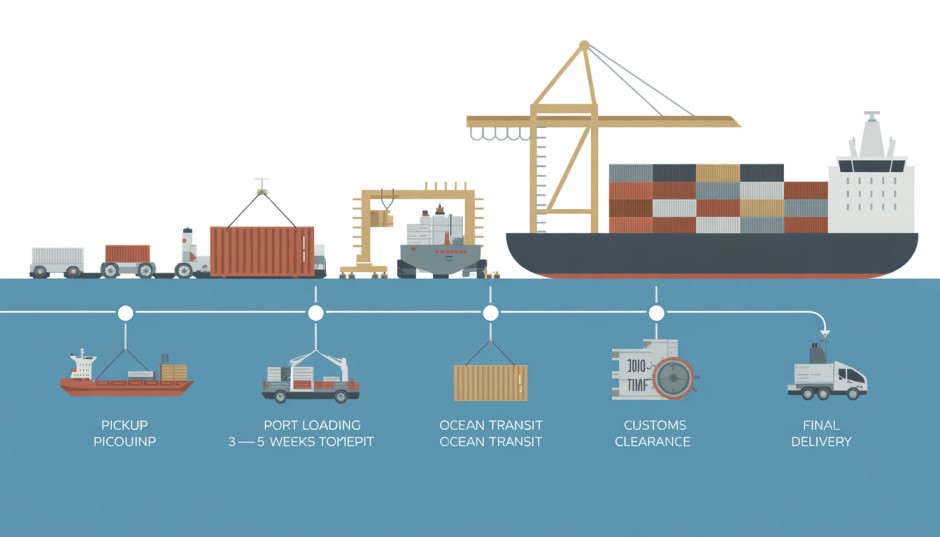
Heavy equipment shipping timeline showing pickup, port handling, ocean transit, customs clearance, and final delivery.
All TransportDepot Inc.
FMC Licensed & Bonded NVOCC #021693
Equipment Loading, Safety & Insurance
Proper loading, securement, and protection are critical when shipping heavy equipment to ensure it arrives safely and without damage.
-
Pre-Shipment Inspection
Equipment is inspected prior to loading to verify condition and operational status.
-
Professional Lashing & Securement
Machinery is safely secured using industry-standard lashing and blocking methods.
-
Marine Cargo Insurance Options
Insurance coverage is available to protect your equipment during ocean transit.
Frequently Asked Questions (FAQs)
Below are common questions about shipping heavy equipment internationally, including shipping methods, eligibility, costs, and customs procedures.
Can Caterpillar & Komatsu equipment be shipped via RoRo?
Yes. Most Caterpillar and Komatsu machines can be shipped via RoRo if they are drivable and in safe operating condition.
What is the cheapest way to ship heavy machinery internationally?
RoRo shipping is usually the most affordable option for self-propelled equipment due to minimal handling and loading costs.
Are used heavy machines allowed for import?
Yes. Used heavy equipment is generally allowed, though import rules vary by destination country.
How long does customs clearance usually take?
Customs clearance typically takes a few days, depending on documentation and port procedures.
What types of heavy equipment qualify for RoRo shipping?
RoRo is suitable for drivable equipment such as excavators, loaders, dump trucks, tractors, and forklifts.
Can oversized equipment be shipped without dismantling?
Yes. Oversized machinery can be shipped intact using RoRo, flat rack, or breakbulk services, depending on size and weight.
✅ Why Choose All TransportDepot?
When you ship car with All TransportDepot, you benefit from:
-
FMC Licensed & Bonded NVOCC (#021693)
-
20+ years of international car shipping experience
-
Nationwide U.S. pickup from all major cities
-
Affordable, competitive rates with no hidden fees
-
Full insurance options for peace of mind
-
Expert support with documentation and customs compliance
👉 We ensure your vehicle arrives safely and on schedule.
👉 Get a Free Quote | 👉 Book Your Shipment

Ian miriams is an Experienced Global Brand & Marketing Manager specializing in building strong international brands, driving digital growth, and executing high-impact marketing strategies across global markets. Skilled in brand positioning, performance marketing, customer acquisition, and data-driven campaigns that increase visibility and revenue.