



If you searched “ship a container to South Africa,” USA to South Africa Container Shipping, or just need to get Ocean Freight to South Africa or just need to get Overall International Container Shipping South Africa information, you’re in the right place.
This guide explains how container shipping from the USA to South Africa works, including service options, container types, cargo compatibility, transit times, costs, and documentation requirements.
In general, container shipping is one of the most flexible and widely used methods for exporting cargo to South Africa. Specifically, it supports personal shipments, commercial exports, vehicles, boats, palletized freight, machinery, and oversized cargo, with multiple loading and handling options available.
Meanwhile, All Transport Depot Inc. operates as a licensed and bonded FMC NVOCC (#021693) and coordinates container shipments from anywhere in the USA to major ports in South Africa through established global ocean carriers.
🚢 Ship with Confidence. Partner with world-renowned NVOCCs and leading global ocean carriers.
👉 Get a Rate:
https://alltransportdepot.com/roro-shipping-cost/
👉 Place Your Order:
https://alltransportdepot.com/place-order/
📲 WhatsApp: +1 (470) 791-4497
📞 Call: +1 (678) 528-5794
📧 Email: ship@alltransportdepot.com
All TransportDepot Inc.
FMC Licensed & Bonded NVOCC #021693
Get Ocean Freight to South Africa
Container Shipping Services to South Africa
Container shipping services to South Africa are structured to support both private and commercial exporters, while also offering flexibility based on cargo type, loading preference, and location.
🚪 Door-to-Port Shipping
In this case, Door-to-Port shipping includes pickup of cargo from a residential address, business, dealership, or warehouse anywhere in the USA, followed by export handling and ocean transport to South Africa.
Accordingly, this option is commonly used for:
International relocations -Ocean Freight to South Africa
Household goods and personal effects
Boats and vehicles
Commercial exports shipped directly from origin
🏠 Container Delivered to Your Location for Loading (Self-Load Option)
Door-to-Port Container Delivery for Client-Managed Loading
As part of Door-to-Port service, a container may be delivered directly to a residence or business for client-managed loading. In practice, this option is selected by shippers who want direct oversight of packing and loading.
In this scenario:
-
First, an empty container is delivered on a chassis
-
Then, the container remains on the chassis throughout loading
-
Next, the client completes loading
-
Finally, the container is returned to the terminal for export to South Africa
Accordingly, this option is commonly used for:
-
Household goods
-
Furniture
-
Mixed cargo
-
Palletized items
Access & Loading Considerations
-
In addition, appropriate loading equipment must be available where required
-
Likewise, vehicles or machinery typically require ramps, docks, or lifting equipment
-
However, if loading extends beyond the scheduled window, additional charges may apply
-
Furthermore, residential or HOA-managed properties may require advance approval
-
Ultimately, any third-party costs (property access restrictions, extended truck time, or local fees) are passed through to the shipment account
🏢 Warehouse-to-Port Shipping
Warehouse-to-Port service is ideal for shippers who prefer professional handling and loading. In this case, cargo is delivered to a U.S. export warehouse, where containers are loaded, secured, and prepared for ocean transport.
Accordingly, this option is commonly used for:
-
Vehicles
-
Boats and marine equipment
-
Palletized commercial freight
-
Machinery and crated cargo
-
High-value or complex shipments
🔒 Professional Warehouse Loading
Warehouse loading allows trained personnel to handle:
-
Blocking and bracing
-
Weight distribution
-
Cargo separation
-
Compliance with ocean carrier and terminal standards
As a result, this approach reduces risk and is recommended for:
-
Boats
-
Machinery
-
Oversized cargo
-
Mixed loads
📦 Shipper-Owned Containers (SOC)
Shipper-Owned Containers (SOC) may be used provided the equipment meets port and carrier acceptance requirements. In this case, SOC shipments typically include:
-
Trucking
-
Export filing
-
Ocean booking
-
Terminal coordination
SOC containers generally must:
-
Be seaworthy and watertight- Before you buy a container, be sure to ask for the seaworthy and watertight certificate
-
Be neutralized (no shipping-line branding or prefixes)
-
Pass terminal inspection prior to acceptance
However, containers that do not meet acceptance standards may be subject to:
-
Additional handling
-
Repositioning
-
Rebooking charges
Container Shipping Methods
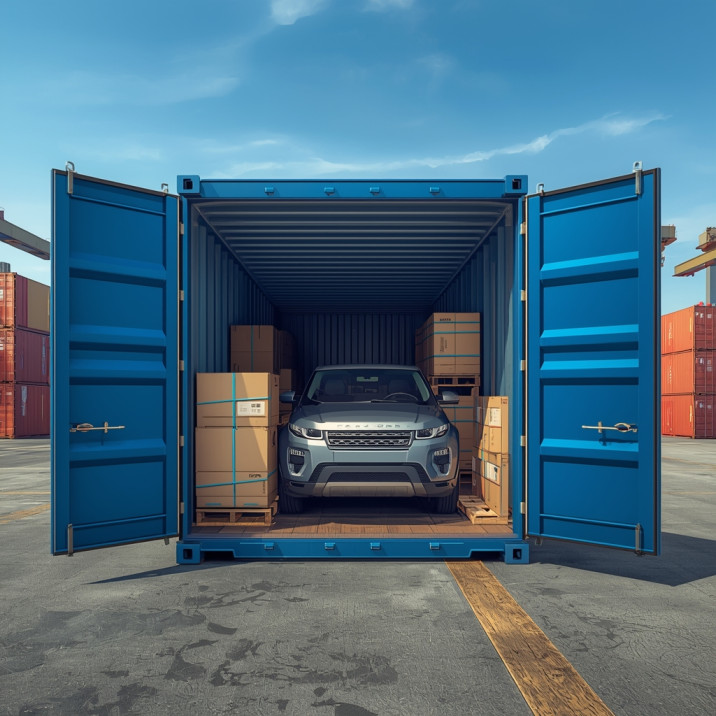
Our Container shipping offers flexible solutions for shipping vehicles, household goods, and commercial cargo. Depending on your shipment size and budget, you can choose between Relocation Services for exclusive use or Less than Container Load (LCL) for shared, cost-effective shipping, along with specialized containers for oversized cargo.

Relocation Services
Ideal for home and office moves
- Door-to-door service
- Secure packing & handling
- Safe, on-time delivery
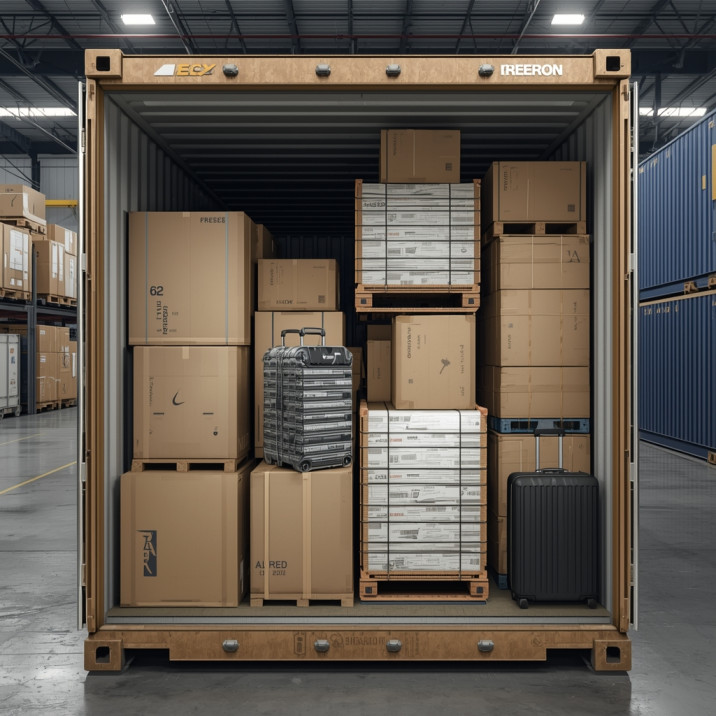
Full Container Load (FCL)
Good for smaller shipments
- Cost-effective for low-volume shipments
- Suitable for boxes, pallets and goods
- Easy shipping without full container cost
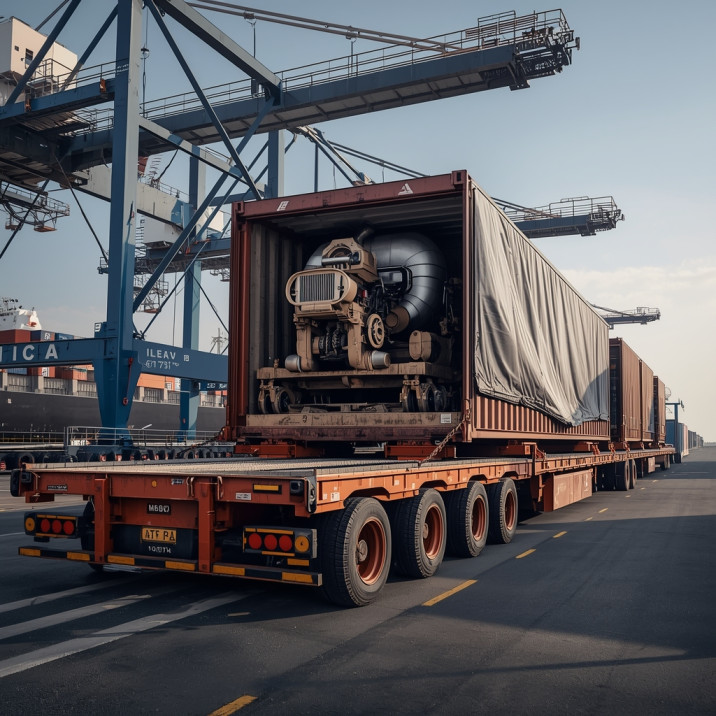
Specialized Container
For oversized or heavy cargo
- Open Top containers for tall cargo
- Flat Rack containers for heavy machinery
- Secure loading with professional handling
What Can Be Shipped in a Container to South Africa?
Container shipping supports nearly all cargo types. In general, if cargo can be safely secured and complies with export regulations, it can typically be shipped by container.
Accordingly, common containerized cargo includes:
-
Vehicles (cars, SUVs, vans, motorcycles)
-
Boats & marine equipment (trailered boats, jet skis, small vessels)
-
Household goods & personal effects
-
Furniture and mixed cargo
-
Palletized freight (commercial or wholesale)
-
Machinery & industrial equipment
-
Construction materials
-
Crated or boxed shipments
-
Oversized and non-standard cargo (open-gauge)
Ultimately, if your cargo fits in — or on — a container, it can typically be shipped to South Africa with the correct equipment and documentation.
All Container Types Available for Shipping to South Africa
Different cargo types require different container configurations. Accordingly, available container options include:
-
20-Foot Standard Containers
-
40-Foot Standard Containers
-
40-Foot High Cube Containers
-
Open-Top Containers
-
Flat Rack Containers
-
Open-Gauge Containers
-
Refrigerated (Reefer) Containers
-
Hazmat-Approved Containers
-
Shipper-Owned Containers (SOC)
In particular, open-top, flat rack, and open-gauge containers are commonly used for boats, machinery, industrial cargo, and oversized freight that exceed standard container dimensions.
How Cargo Is Loaded Into Containers
Loading methods vary based on cargo type, size, and origin location. Accordingly, common methods include:
-
Warehouse loading using forklifts and professional bracing
-
Client-managed loading at a residence or business
-
Crane-assisted loading for boats, machinery, or SOC containers
-
Ramp or dock loading for rolling cargo
-
Palletized loading for boxed or commercial freight
Ultimately, selecting the correct loading method helps ensure port acceptance, cargo safety, and smooth customs processing.
Who Typically Ships Containers to South Africa?
Container shipping to South Africa is commonly used by a wide range of customers. In particular, this includes:
-
Families relocating internationally
-
Auto exporters and dealerships
-
Boat owners and marine businesses
-
Furniture and mixed-cargo shippers
-
Commercial exporters and wholesalers
-
Contractors shipping equipment into the EU
🚢 Ship with Confidence. Partner with world-renowned NVOCCs and leading global ocean carriers.
👉 Get a Rate:
https://alltransportdepot.com/roro-shipping-cost/
👉 Place Your Order:
https://alltransportdepot.com/place-order/
📲 WhatsApp: +1 (470) 791-4497
📞 Call: +1 (678) 528-5794
📧 Email: ship@alltransportdepot.com
All TransportDepot Inc.
FMC Licensed & Bonded NVOCC #021693
Why Ship a Container to South Africa?
South Africa is a key logistics gateway to Southern Europe, supported by modern port infrastructure and efficient customs procedures. Consequently, shipping a container to South Africa provides direct access not only to the Portuguese market but also to the broader European Union. Moreover, its strategic Atlantic location strengthens trade routes between North America and Europe. Therefore, many exporters and private shippers select South Africa as their primary EU entry point.
Accordingly, container shipping to South Africa proves particularly well-suited for:
-
First, international relocations
-
Next, vehicle and boat exports
-
Additionally, commercial and wholesale cargo
-
Likewise, furniture and personal effects
-
Finally, machinery and industrial equipment
Transit Times When Shipping a Container to South Africa
Transit times vary depending on the U.S. port of departure. Generally speaking, estimated ocean transit durations include:
-
East Coast (New York, Savannah): 18–25 days
-
Gulf Coast (Houston): 22–28 days
-
West Coast (Los Angeles, Oakland): 28–35 days
Nevertheless, transit times can fluctuate due to carrier schedules, port congestion, vessel routing, weather, and seasonal demand. Consequently, early booking and flexible planning are essential to secure the best sailings.
Shipping Rates to South Africa (USA → South Africa)
Shipping costs depend on container size and origin port. Typically, estimated rate ranges are as follows:
20-Foot Container, For Example
-
East Coast: $3,000 – $4,200
-
Gulf Coast: $3,300 – $4,500
-
West Coast: $3,800 – $5,000
40-Foot Container, For Example
-
East Coast: $5,000 – $6,800
-
Gulf Coast: $5,300 – $7,000
-
West Coast: $5,800 – $7,500
Still, rates vary depending on container type, port of loading, cargo specifics, and carrier surcharges.
Main Ports in South Africa for Container Shipping
South Africa boasts a modern and efficient seaport and maritime logistics infrastructure that supports international container shipping, RoRo vehicle transport, project cargo, heavy machinery freight, bulk commodities, breakbulk shipments, and oversized equipment exports. Consequently, choosing the appropriate South African destination port is vital for ocean transit time, inland trucking distribution, rail connections, customs clearance, import processing, and last-mile delivery when shipping containers from the USA to South Africa.
Below are the two primary international container ports in South Africa commonly used for U.S.–South Africa ocean freight, full-container-load (FCL) shipments, consolidated cargo, commercial exports, household goods relocations, and vehicle imports.
⚓ Port of Durban — KwaZulu-Natal Province
Best for: Containers, vehicles, household goods, commercial cargo, international relocations, RoRo shipments, palletized freight, project cargo, personal effects, import/export shipments
The Port of Durban is South Africa’s largest and busiest seaport, serving as the primary gateway for container shipping, RoRo operations, vehicle imports, and commercial ocean freight. Situated on the east coast along the Indian Ocean, it provides direct access to Durban’s metropolitan area and the KwaZulu-Natal region, making it a top destination port for U.S.–South Africa container shipments, inland distribution, and regional trade.
Accordingly, key advantages include:
-
Extensive container terminal infrastructure with state-of-the-art cargo handling
-
Robust road and rail intermodal connectivity for inland freight transport
-
Efficient South African customs clearance and port processing
-
Frequent ocean sailings from major U.S. container ports
-
Excellent access for inland trucking across KwaZulu-Natal and neighboring provinces
In practice, shippers commonly use the Port of Durban for:
-
Household goods and personal effects shipments
-
Vehicle and motorcycle imports to South Africa
-
Commercial and palletized export cargo
-
Mixed, consolidated, and full-container-load (FCL) shipments
🔗 Transnet National Ports Authority (Durban):
https://www.transnetnationalportsauthority.net/OurPorts/Durban/Pages/default.aspx
⚓ Port of Cape Town — Western Cape Province
Best for: Containers, vehicles, bulk cargo, industrial freight
The Port of Cape Town, serving the greater metropolitan area, is South Africa’s primary deep-water port on the west coast. Specifically, it plays a vital role in handling containerized cargo, vehicles, industrial equipment, and bulk freight for shipments destined for the Western Cape and surrounding regions. Moreover, its strategic location enhances inland connectivity throughout the region.
Accordingly, key advantages include:
-
First, modern deep-water container terminals
-
Next, high efficiency for industrial and commercial cargo
-
Additionally, strong logistics connections to Western Cape and inland areas
-
Furthermore, reduced inland transport time for Cape Town-region destinations
-
Finally, reliable handling of oversized and project cargo
For this reason, shippers frequently select Cape Town for:
-
In particular, commercial and wholesale imports — a key consideration
-
Likewise, industrial machinery and equipment
-
Also, vehicles and rolling cargo
-
As well, oversized or non-standard container shipments
🔗 Transnet National Ports Authority (Cape Town):
https://www.transnetnationalportsauthority.net/OurPorts/CapeTown/Pages/default.aspx
Choosing the Right Port in South Africa
When shipping a container to South Africa, generally, the choice between Durban and Cape Town depends on several important factors. Specifically, these include:
-
First, the final delivery location
-
Next, cargo type and dimensions
-
Additionally, inland transport and distribution requirements
-
Finally, customs clearance and handling preferences
Ultimately, both ports can accommodate standard containers, high-cube containers, open-top units, flat racks, and open-gauge cargo, depending on shipment specifications.
Customs & Documentation (South Africa – 2026)
When shipping a container to South Africa, customs clearance is a crucial step. Therefore, shippers must prepare all necessary documentation in advance. Typically, required documents include:
-
First, the Bill of Lading
-
Next, a Commercial Invoice and Packing List
-
Additionally, a passport or company registration
-
If applicable, the vehicle registration documents
-
Likewise, the South African Customs Declaration
Import Duties & Taxes – International Container Shipping South Africa
Upon arrival in South Africa, customs authorities may levy import charges. As a result, importers should expect the following:
-
Primarily, customs duty based on HS tariff classification
-
Furthermore, VAT, port handling fees, and ocean freight charges
-
In certain cases, additional fees for restricted or controlled goods
📞 South African Revenue Service (SARS) Customs Contact: +27 12 422 4000
FAQs – Shipping Containers to South Africa
Can a container be delivered to a home for loading?
Yes. In many cases, Door-to-Port service delivers the container directly to a residence or business for client-managed loading, subject to access and scheduling considerations.
When a container is delivered to my door, will it be placed on the ground or remain on a chassis?
Typically, the driver keeps the container on a chassis during the loading window. Ground placement remains uncommon and may require special equipment, permits, or additional fees.
How long can I keep the container for loading?
In most cases, we schedule a loading window—often 1–3 days—although some locations allow only a short live-load period (such as two hours). In addition, time may result in daily charges.
Can boats and vehicles ship in containers?
Yes. In general, we ship boats, vehicles, and marine equipment using standard, open-top, flat rack, or open-gauge containers. Although this may be true Roro is a great alternative.
Do services support oversized cargo?
Yes. Accordingly, we offer open-top, flat rack, and open-gauge container options.
Do I need special equipment to load heavy cargo?
Yes. As a matter of fact, You may need forklifts, ramps, cranes, or docks to load vehicles, boats, or machinery.
Is export documentation handled?
Yes. We typically handle U.S. export filings and coordination together with Ocean Freight to South Africa
What documents are required to ship to South Africa?
Generally, you must provide export filings, commercial invoices, packing lists, vehicle titles (if applicable), and consignee identification. Above all
Generally, this includes export filings, commercial invoices, packing lists, vehicle titles (if applicable), and consignee identification.
Will I need to pay duties or taxes in South Africa? USA to South Africa Container Shipping
Yes. Depending on the shipment and Ocean Freight to South Africa. Moreover, Portuguese customs may assess import duties, VAT, or clearance fees.
Can customs clearance be arranged in South Africa?
Yes. Additionally, local agents can assist with destination customs processing to help with International Container Shipping South Africa
Is marine insurance available?
Yes. Additionally, we can arrange marine cargo insurance upon request. this is not part of Ocean Freight to South Africa.
Can I track my container during transit? USA to South Africa Container Shipping
Yes. Moreover, we can arrange inland delivery from the port to the final Port destination. All things considered, when considering USA to South Africa Container Shipping
Start Your 2026 Shipment to South Africa- International Container Shipping South Africa
All Transport Depot Inc. All in All actively provides Door-to-Port, Warehouse-to-Port, and SOC container shipping services from anywhere in the USA. From pickup through export documentation and ocean transport, For instance our team manages every shipment with precision, professionalism, and care.
👉Place Your Order:
https://alltransportdepot.com/place-order/
📧 Email: ship@alltransportdepot.com
📞 Call: +1 (678) 528-5794
📲 WhatsApp: +1 (470) 791-4497

Ruth serves as Sales Manager – Global Logistics & Client Relations at All TransportDepot Inc., a U.S.-based FMC Licensed & Bonded NVOCC specializing in international vehicle shipping, containerized cargo, heavy equipment, and project logistics.
In his role, he manages global client relationships, prepares shipping quotations, and coordinates closely with operations and logistics teams to ensure efficient and reliable international transportation solutions for customers worldwide.