



Container shipping to Europe is a reliable and cost-effective solution for transporting vehicles, household goods, heavy machinery, and commercial cargo internationally. Whether you are shipping a container to Europe for personal relocation or business purposes, international container shipping provides secure handling and flexible container options—including 20ft, 40ft, open-top, and flat-rack containers—making it suitable for nearly all cargo types.
At All Transport Depot, we offer professional container shipping to Europe with complete end-to-end logistics support. The cost of container shipping to Europe typically ranges from $1,500–$3,000 for a 20ft container and $2,800–$5,500 for a 40ft container, depending on the origin port, destination country, cargo type, and shipping method. With transparent pricing and expert coordination, we ensure your shipment arrives safely and on time.
Container Shipping Methods
Our Container shipping offers flexible solutions for shipping vehicles, household goods, and commercial cargo. Depending on your shipment size and budget, you can choose between Relocation Services for exclusive use or Less than Container Load (LCL) for shared, cost-effective shipping, along with specialized containers for oversized cargo.
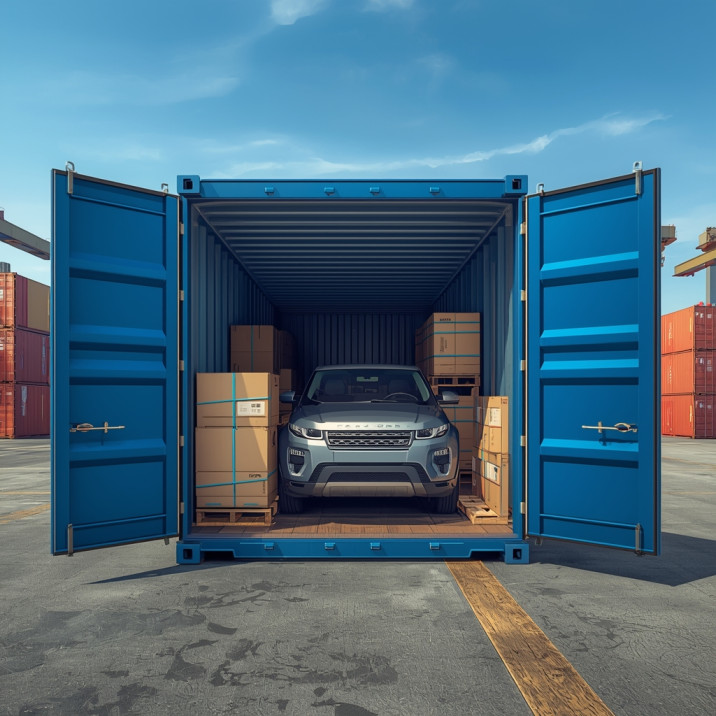
Relocation Services
Ideal for home and office moves
- Door-to-door service
- Secure packing & handling
- Safe, on-time delivery
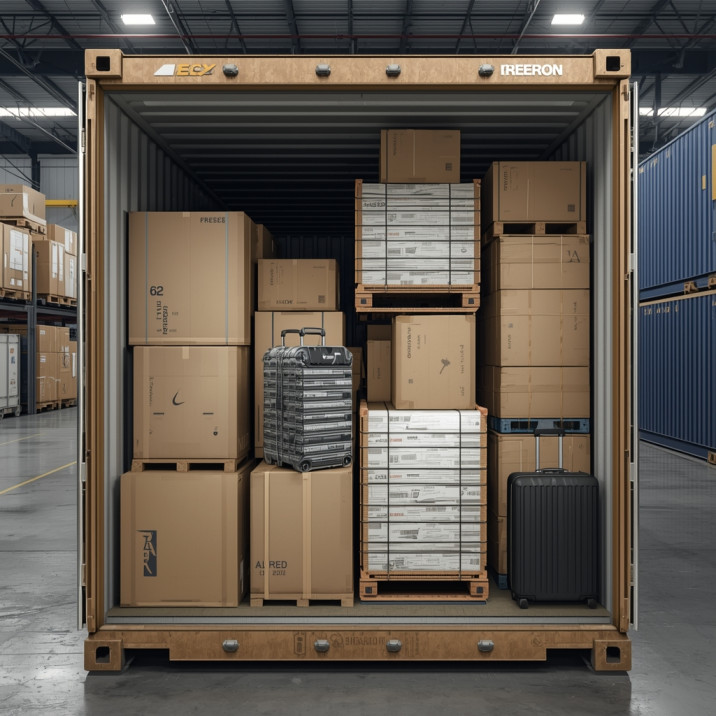
Full Container Load (FCL)
Good for smaller shipments
- Cost-effective for low-volume shipments
- Suitable for boxes, pallets and goods
- Easy shipping without full container cost

Specialized Container
For oversized or heavy cargo
- Open Top containers for tall cargo
- Flat Rack containers for heavy machinery
- Secure loading with professional handling
Container Sizes Available for Shipping
When planning container shipping, selecting the right container size is essential for ensuring cargo safety, cost efficiency, and smooth transit. Different container sizes are designed to accommodate everything from personal belongings and vehicles to heavy machinery and oversized cargo. Below are the most commonly used container options available for shipping to destination country.
20ft Shipping Container
The 20ft container is one of the most popular choices for international container shipping to XXX. It is ideal for small to medium-sized shipments and offers a cost-effective solution for transporting cargo securely.
Best suited for:
- One vehicle or SUV
- Household goods and personal effects
- Small commercial shipments
40ft Shipping Container
A 40ft container provides nearly double the space of a 20ft container, making it suitable for large shipments or multiple items. It is commonly used for business cargo, relocation shipments, and multiple vehicles.
Best suited for:
- Multiple vehicles
- Large household relocations
- Bulk commercial cargo
Open Top Container
Open top containers are designed for cargo that cannot be loaded through standard container doors due to height or shape. Cargo is loaded from the top using cranes and secured properly for ocean transport.
Best suited for:
- Tall or oversized machinery
- Construction equipment
- Industrial cargo
Flat Rack Container
Flat rack containers are used for heavy, wide, or irregularly shaped cargo that does not fit inside standard containers. These containers have open sides and are specially designed for oversized and heavy loads.
Best suited for:
- Heavy machinery
- Construction and mining equipment
- Large industrial components
What Can Be Shipped in a Container
Container shipping allows a wide range of cargo types to be transported safely and efficiently. Whether you are shipping personal belongings or commercial freight, containers provide secure, weather-protected space suitable for almost all types of goods. Below are the most common items shipped in containers.
Vehicles (Cars, SUVs & Motorcycles)Cars, SUVs, and motorcycles can be safely shipped in 20ft or 40ft containers, offering maximum protection during transit. Container shipping is especially preferred for luxury, classic, or non-running vehicles.
Household Goods & Personal EffectsContainer shipping is ideal for relocating household items such as furniture, appliances, electronics, and personal belongings. Both FCL and LCL shipping options are available depending on shipment size.
Commercial Cargo & General FreightBusinesses commonly use container shipping to XXX for transporting retail goods, inventory, raw materials, and packaged commercial products in bulk.
Heavy Machinery & Industrial EquipmentConstruction equipment, agricultural machinery, and industrial tools can be shipped using standard containers, open top containers, or flat rack containers, depending on size and weight.
Oversized & Project CargoLarge or irregularly shaped cargo that exceeds standard container dimensions can be shipped using flat rack or open top containers, ensuring secure handling for specialized shipments.
Safe & Secure Shipping for All Cargo TypesContainer shipping to XXX provides excellent protection against weather, handling damage, and theft, making it a reliable solution for both personal and commercial shipments.
Container Shipping Process (Step-by-Step)
Container shipping follows a simple and structured process to ensure safe and timely delivery.
Step 1: Request a shipping quote by sharing cargo details and destination.
Step 2: Book the container and confirm the sailing schedule.
Step 3: Load and secure cargo inside the container.
Step 4: Prepare documents and complete export clearance.
Step 5: Ocean freight transit to the destination country.
Step 6: Customs clearance at the destination port.
Step 7: Final delivery or port pickup.
Required Documents for Container Shipping
To ensure smooth and compliant container shipping, certain documents are required for export and import clearance. Having accurate paperwork helps avoid delays, penalties, and customs issues.
Commonly Required Documents
-
Bill of Lading (B/L) – Proof of shipment and ownership
-
Commercial Invoice – Details of cargo value and description
-
Packing List – Itemized list of goods inside the container
-
Passport or Company ID – For personal or commercial shipments
-
Import Permit (if required) – Based on cargo type and destination regulations
Additional documents may be needed depending on the nature of the cargo and local customs requirements in the destination country.
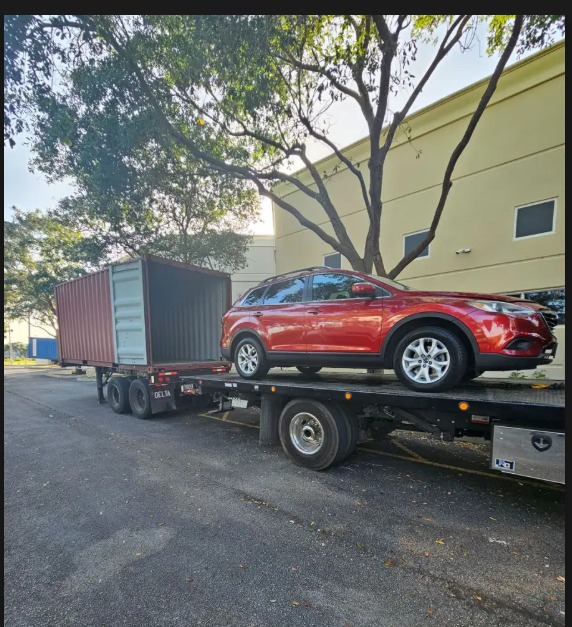
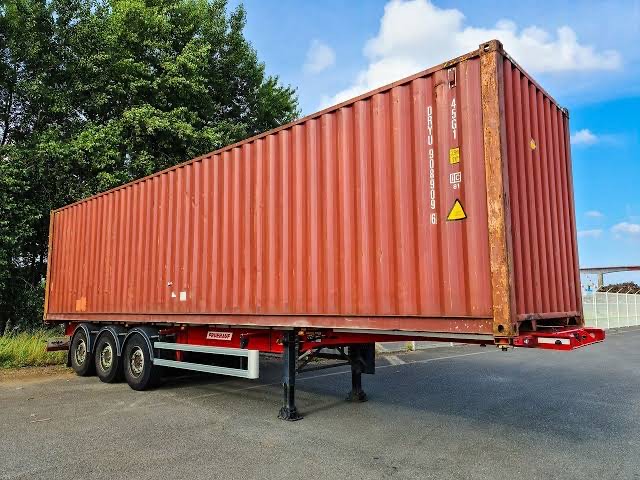
We operate and coordinate loading through strategically located U.S. facilities, providing flexible, reliable, and nationwide coverage for a wide range of cargo, including vehicles, household goods, commercial freight, and HAZMAT-compliant shipments.
Our primary loading locations include:
- Savannah, GA
- Atlanta, GA
- Los Angeles, CA
- Elizabeth, NJ
- Tacoma, WA
- Chicago, IL
In addition to facility-based loading, we also offer container door-to-ocean service, allowing a container to be delivered directly to a residence or commercial property for on-site loading, subject to access, safety, and scheduling requirements.
On-Site Container Loading Guidelines
We will deliver the ordered container to your location on the scheduled date and arrange return once loading is completed.
Important Loading Conditions
- The container will arrive on a chassis and will remain on the chassis at all times
- The container will not be placed on the ground
- The client is fully responsible for all loading activities
- Two (2) hours of free loading time are included
- Additional loading time: rate to be advised
- Weekend option: additional surcharge applies (Friday drop-off with Sunday pick-up after 5:00 PM)
- A 4-hour delivery window will be assigned, subject to traffic and scheduling conditions
- Vehicles or machinery require a proper loading ramp or dock
- Household goods may be lifted off the chassis only at the client’s cost and responsibility
- The client must ensure all required loading equipment is available, including but not limited to:
- Ramps
- Loading docks
- Forklifts
- Cranes or lifting services
- If the container is not ready for pickup on the scheduled date, a $250 per day delay surcharge will apply
- These guidelines ensure safe loading, operational efficiency, and compliance with carrier and port requirements.
Transit Time for Container Shipping to Europe
The transit time for container shipping to Europe typically ranges from 12 to 30 days, depending on the origin port, shipping route, destination country, and carrier schedule. Shipments from the U.S. East Coast usually arrive within 12 to 20 days, while shipments from the U.S. West Coast may take 25 to 30 days. Cargo shipped from other regions may vary based on routing and port of entry.
Transit times can be affected by port congestion, weather conditions, customs inspections, and whether the shipment is FCL or LCL. Additional time should also be allowed for customs clearance and inland delivery within Europe.
Cost to Ship a 20ft Container to Europe
A 20ft container is ideal for smaller shipments such as personal goods, one vehicle, or light commercial cargo. Prices vary by departure port and European destination.
-
From U.S. East Coast (Newark, Baltimore, Savannah): $1,300 – $2,200
-
From U.S. Gulf Coast (Houston): $1,500 – $2,500
-
From U.S. West Coast (Los Angeles, Oakland): $2,200 – $3,500
Cost to Ship a 40ft Container to Europe
A 40ft container is best suited for large household moves, multiple vehicles, or commercial shipments. Rates vary depending on the U.S. departure location and European destination.
-
From U.S. East Coast: $2,500 – $4,000
-
From U.S. Gulf Coast: $2,800 – $4,500
-
From U.S. West Coast: $3,800 – $5,800
European Shipping Destinations
We provide dependable container and commercial cargo shipping services to key destinations across Europe.
As a result, exporters can take advantage of Europe’s advanced port infrastructure and
well-established trade networks for smooth, reliable delivery. Below are the primary European destinations
we serve with complete logistical support and customs compliance.
- Shipping to Albania – Albania connects Mediterranean trade corridors with
efficient container routing into Southeastern Europe.
Explore container shipping to Albania - Shipping to Belarus – Belarus supports Eastern European freight movement
through established inland logistics networks.
Learn more about shipping to Belarus - Shipping to Belgium – Belgium’s major seaports handle large container volumes across
Europe and beyond.
Explore shipping to Belgium - Shipping to Denmark – Denmark connects Scandinavian and Baltic container
trade routes with advanced port facilities.
Ship a container to Denmark - Shipping to England (United Kingdom) – England serves as a key European
gateway for containerized commercial freight.
Ship a container to England (UK) - Shipping to France – France provides strong Atlantic and Mediterranean
port access for containerized cargo.
Ship a container to France - Shipping to Germany – Germany is a premier European logistics hub with extensive
container and freight handling capacity.
View container shipping to Germany |
Ship a container to Germany - Shipping to Greece – Greece supports Mediterranean container trade
with major seaports serving Europe and the Middle East.
Ship a container to Greece - Shipping to Ireland – Ireland connects Atlantic shipping lanes
to key European commercial markets.
Ship a container to Ireland - Shipping to Italy – Italy’s Mediterranean ports support strong
container and industrial cargo volumes.
Ship a container to Italy - Shipping to Luxembourg – Luxembourg connects high-volume European trade with
centralized freight distribution.
Discover container shipping to Luxembourg - Shipping to Netherlands – The Netherlands is home to one of the busiest container ports
in Europe, facilitating efficient global connections.
View container shipping to Netherlands - Shipping to Norway – Norway supports containerized and project cargo through key
Scandinavian port gateways.
Learn about shipping to Norway - Shipping to Portugal – Portugal opens gateways from the Atlantic into European trade
lanes.
Discover container shipping to Portugal - Shipping to Slovakia – Access central European markets with efficient container
routing.
Learn more about shipping to Slovakia - Shipping to Slovenia – Slovenia offers strategic access from Mediterranean ports into
Europe.
Explore shipping to Slovenia |
Ship a container to Slovenia - Shipping to Spain – Spain supports major Atlantic and Mediterranean
container shipping corridors.
Ship a container to Spain - Shipping to Sweden – Sweden connects Baltic Sea trade routes with
Northern European logistics networks.
Explore container shipping to Sweden
Ultimately, each European destination benefits from secure cargo handling, strategic port
locations, and streamlined customs processes compliant with international regulations.
Major Ports Used for Container Shipping to Europe
Europe has a vast network of modern seaports that efficiently handle international container cargo for both personal and commercial shipments.
Major European ports used for container shipping include:
-
Port of Rotterdam (Netherlands) – Europe’s largest container port
-
Port of Antwerp-Bruges (Belgium) – Major logistics hub
-
Port of Hamburg (Germany) – Key gateway for Central Europe
-
Port of Felixstowe (United Kingdom) – UK’s primary container port
-
Port of Valencia (Spain) – Southern Europe trade hub
The choice of port depends on the destination country, cargo type, inland delivery location, and customs requirements. Selecting the right European port helps reduce transit time, inland transport costs, and customs delays.
Import Duties and Taxes in Europe
Import duties and taxes in Europe depend on the destination country and the type of goods being imported.
-
Customs Duty: Typically 0–12% depending on product classification
-
VAT: Generally 17%–27%, varying by country
-
Additional Fees: May include port handling charges, customs clearance fees, and inspections
EU member states follow harmonized customs procedures, but VAT rates and exemptions vary by country.
FAQs – Container Shipping to Europe
Is container shipping to Europe safe?
Yes, container shipping to Europe is safe and secure. Containers are sealed, weather-resistant, and ideal for shipping vehicles, household goods, commercial cargo, and machinery.
How much does it cost to ship a container to Europe?
The cost typically ranges from $1,500–$3,000 for a 20ft container and $2,800–$5,500 for a 40ft container, depending on the destination country, cargo type, and shipping method.
Can I ship a car in a container to Europe?
Yes, cars, SUVs, and luxury vehicles can be safely shipped in 20ft or 40ft containers, offering excellent protection during transit.
What is the cheapest way to ship cargo to Europe?
For small shipments, LCL (Less than Container Load) is the most economical option. For larger shipments, FCL (Full Container Load) provides better value and security.
How long does container shipping to Europe take?
Container shipping to Europe typically takes 12 to 30 days, depending on the origin port, destination country, and customs clearance process.
Do I need a customs broker in Europe?
Using a licensed customs broker in the destination country is highly recommended to ensure smooth clearance and compliance with EU or local customs regulations.
✈️ Get a Container Shipping Quote Today
Ready to ship your Container? Here’s what we’ll need to get started:
📧 Email: ship@alltransportdepot.com
📲 WhatsApp: +1 (470) 791-4497
📞 Phone: +1 (678) 528-5794
At All TransportDepot Inc., we ensure premium service for safe, secure, and reliable car air shipping worldwide.
👉 Don’t wait—Get Your Free Quote Now

Senior IT Executive | Digital Transformation | Global Logistics & Transportation Technology at All Transport Depot. Specializes in integrating advanced digital systems, automation, and logistics management to support global vehicle and heavy equipment shipping. Known for optimizing operational performance, strengthening technological infrastructure, and delivering efficient, scalable transportation solutions worldwide.